
Make Better Decisions at the Blackjack Table
 Available in US
Learn how hand choices, deck count, table rules, payouts and practice shape sound blackjack decisions.

The Basic Decisions Behind Every Blackjack Hand
Blackjack is a contest against the dealer, not a race to reach twenty-one exactly. Your aim is to finish closer to twenty-one than the dealer without going over. That last part matters: a hand that exceeds twenty-one is out, even if the dealer later finishes with a higher total. I used to focus on the number and ignore the decision in front of me. That is an easy way to make a hand harder than it needs to be.
The card values are straightforward. Number cards count as their face value, picture cards count as ten, and an ace can be worth one or eleven. An ace is flexible, but it does not make every hand safe. Its value depends on which total helps your hand without taking you over twenty-one.
Once your cards are dealt, the main choices are to hit, stand, double down or split. They are not four versions of the same idea. Each changes what can happen next, and some choices are available only in particular circumstances or under the table’s rules. The useful habit is to identify what your hand is asking for before clicking or speaking.
Choosing a blackjack strategy starts with knowing where you plan to play and what operator details are available. Use this list as a reference when considering options for your 2026 blackjack sessions in New Zealand.
-
BitStarz
- License
- Curaçao Gaming Authority, licence no. OGL/2024/165/0185
BitStarz lists a Curaçao Gaming Authority licence, number OGL/2024/165/0185. Check the operator details as part of deciding where to play.
-
Neospin
- License
- Tobique Gaming Commission, licence no. 0000064
Neospin lists a Tobique Gaming Commission licence, number 0000064. This licensing information may help you assess the operator.
-
Lamabet
- Payout speed
- 1-3 business days
Lamabet lists a payout speed of 1–3 business days. You can factor this stated timeframe into your choice of operator.
-
Ricky Casino
- License
- Tobique Gaming Commission, licence no. 0000002
Ricky Casino lists a Tobique Gaming Commission licence, number 0000002. Review this detail when considering the operator.
-
7Bit Casino
- License
- Tobique Gaming Commission, licence no. 0000091
7Bit Casino lists a Tobique Gaming Commission licence, number 0000091. Its licence information is a concrete detail to consider.
-
Play Grand
- License
- Malta Gaming Authority, licence no. MGA/B2C/370/2017
Play Grand lists a Malta Gaming Authority licence, number MGA/B2C/370/2017. You can take this information into account when evaluating the operator.
-
N1 Casino
- License
- Malta Gaming Authority, licence no. MGA/B2C/394/2017
N1 Casino lists a Malta Gaming Authority licence, number MGA/B2C/394/2017. This is the available licensing detail for your consideration.
-
Wintino
- Payout speed
- 1-3 business days
Wintino lists a payout speed of 1–3 business days. You can consider this stated timeframe when choosing an operator.
-
Zotabet
- License
- 07017519840
- Payout speed
- 1-3 business days
Zotabet lists the number 07017519840 and a payout speed of 1–3 business days. These are the available details to consider when assessing the operator.
Hit: take another card
Hitting means asking for another card to add to your total. It can move a low hand towards twenty-one, but it can also push a total over the limit. The ace’s flexibility can soften that risk in some hands: if it can count as one instead of eleven, the hand may remain in play after a card that would otherwise make it too high.
That does not mean an ace makes hitting automatically right. Nor does a total that looks modest automatically call for another card. The dealer’s exposed situation matters too, because you are trying to beat the dealer, not build the prettiest total on the screen. A decision that feels bold is not necessarily a good one. I have hit because I wanted to “fix” an awkward hand, then watched the next card make it worse. Wanting a better total is not a plan.
Stand: keep what you have
Standing means taking no more cards and letting the hand proceed. It can feel passive, especially when your total is not twenty-one, but it is still a decision: you are keeping the chance that your current hand will be enough rather than risking another card.
The aim is not to make every hand look impressive. It is to make a decision that fits the situation. If you stand, you are accepting the total you have and relying on the dealer’s final hand to determine the result. That can feel uncomfortable when the dealer’s visible card looks strong. Discomfort alone does not tell you what to do.

Double down: increase the commitment
Doubling down means adding to your original wager in exchange for taking one more card. It is a more committed choice than hitting: you are not simply asking for another card and then deciding again; you are taking the extra card as the next step.
That makes timing important. Doubling is not just a way to chase a hand that has started badly, and it is not a button to press because a win feels close. It changes how much is at stake while limiting what you can do with the hand afterwards. I find it helps to think of it as a specific decision about the hand, not as a confidence move. Feeling sure is not the same as having a sound reason.
Split: turn a pair into separate hands
When your first two cards form a pair, splitting allows them to become separate hands, each played on its own. You then make decisions for each hand rather than treating the pair as one total. That can create more options, but it also means handling more than one outcome in the same round.
A pair can look like an obvious invitation to split, but the matching cards alone do not settle the question. The new hands will face the dealer separately, and the decision changes the shape of the round. I used to see “pair” and think “split”; that shortcut ignored the rest of the situation. One label is not a complete strategy.
Hit
Asking for another card to add to your total. It can move a low hand towards twenty-one.
Stand
Taking no more cards and letting the hand proceed. You are keeping the chance that your current hand will be enough.
Double down
Adding to your original wager in exchange for taking one more card. It changes how much is at stake.
Split
Turning a pair into separate hands, each played on its own. This creates more options.
Make the choice, not the wish
For any hand, pause long enough to name your total, notice whether an ace can count either way, and identify which decisions are actually available. Then consider the dealer you are playing against. This small routine will not tell you the right move in every situation, but it stops you from acting only on nerves, impatience or the hope that the next card will rescue you.
A basic blackjack strategy is built around repeated decisions like these. It is not a promise that every hand will go your way, and a sensible choice can still lose. The point is to make the decision deliberately instead of treating each card as a fresh excuse to improvise. That is the groundwork.
How to Read a Basic Strategy Chart
A basic strategy chart is a lookup tool, not a prediction. You find the row that matches your hand, follow it across to the column for the dealer’s visible card, and read the suggested decision where they meet. The chart gives you a consistent way to choose; it cannot tell you what the next card will be.
That sounds simple. It took me longer than I’d like to admit to stop treating the chart like a lucky charm.

First, identify what kind of hand you have. A hard hand has no ace being counted as eleven; a soft hand has an ace that can be counted that way without taking you over 21. A pair is shown separately because you may have the option to split it. The chart’s labels can vary, so check its key before playing rather than assuming every shorthand means the same thing.
Then look at the dealer’s upcard. A chart’s recommendation depends on the combination of your hand and the dealer’s visible card, not just on whether your own total feels strong. A move that is sensible for one combination may not be the chart’s choice for another. Don’t scan a row and pick the action that looks most comfortable. Find the exact intersection.
The actions are the ones available at the table: hit, stand, double down or split, with surrender appearing only where the rules allow it. If a recommendation names an action you cannot take in that situation, follow the table’s available options and check that the chart was made for the game you are actually playing. A blackjack basic strategy card can make this process easier to follow, but it still needs a readable key and a matching set of rules.
I used to glance at a chart, remember a few bold-looking moves and call that “the best basic strategy.” That was mostly confidence wearing a costume. A simple blackjack strategy is not a handful of sayings; it is a set of decisions tied to specific hands and dealer cards. If you are unsure which cell applies, pause before acting. Speed is not the point.
Do
- Find the exact intersection on the chart
- Check the chart's key before playing
- Use the chart as a decision aid
Don't
- Treat the chart like a lucky charm
- Scan a row and pick the most comfortable action
- Assume every shorthand means the same thing
A chart also does not promise a winning hand, a winning session or a way to beat blackjack every time. It suggests a decision based on the situation, while the cards still decide how that hand unfolds. I find it useful precisely because it keeps me from making a snap choice and then inventing a reason for it afterwards. Less drama.
There is a limit to what the chart answers. It helps with decisions during a hand; it does not tell you how much to stake, guarantee a profit, or turn a tournament into a standard game. Tournament conditions can make the aim different, so a regular chart should not be mistaken for a complete tournament plan. Nor should you use a chart for a game whose rules it does not describe.
You may see separate references labelled for a dealer who stands on soft 17 or one who hits it. Treat that wording as a rule setting, not a decorative note: choose the chart whose label matches the table. If you cannot tell which applies, check the game rules before relying on the chart. A mismatched reference can give you a neat answer to the wrong question.
I keep a chart nearby when I’m learning, but I try to understand why I’m looking at a particular row rather than memorising isolated instructions. That makes it easier to catch when I have misread my hand or followed the wrong column. The chart is a decision aid. Not a crystal ball.

Why the Number of Decks Changes the Chart
A strategy chart is tied to the game it describes. The number of decks affects the mix of cards in play, while other table rules can change what a sound decision looks like. So a chart labelled for a single deck is not automatically the right reference for a shoe game, and a multi-deck chart should not be treated as a universal answer.
I learned this the clumsy way: I once kept a chart open beside a game because the decisions looked familiar. Familiar was not the same as matching. Before relying on a reference, I now check the game’s rules and look for the deck count the chart was made for. Small detail. Not optional.
You may see separate charts for one deck, two decks, six decks or eight decks. Those labels describe different game conditions, not different levels of difficulty. A single-deck strategy and a chart for a game using several decks can recommend different plays in some situations. That does not mean one chart is badly made; it means each is answering for a different setup. If you cannot find a chart that matches the game, do not assume the closest-looking one is exact.
Deck count is only part of the match. The dealer’s soft-17 rule matters, as do surrender availability and the payout for a natural blackjack. These details vary between games. A specialist review may report the rules for a particular table, but I still check the game’s own information before playing; table settings can be easy to overlook.
This is where “standard strategy” can mislead. Standard does not mean one chart fits every table. It means the chart gives decisions for stated conditions. Change those conditions and some recommendations may change with them. The practical job is not to memorise every version; it is to make sure the version in front of you belongs to the game you are actually playing.
When comparing a six-deck blackjack chart with a chart for eight decks, check the rule notes as well as the heading. The deck count alone does not tell you whether the dealer hits or stands on soft 17, whether surrender is offered, or what the blackjack payout is. A chart that matches the deck count but not the rest of the rules may still be the wrong reference.
I’d treat any blackjack strategy guide as a tool with a label, not as a promise. Read that label before you play: deck count, dealer rule, surrender, payout. If one of those differs from the table, find a reference for the actual conditions or pause rather than filling the gap by guessing. No clever shortcut. Just a better fit.

Practice Without Mistaking Speed for Skill
Practice can make familiar decisions feel less awkward, but a fast run of hands is not proof that you have mastered blackjack. I used to treat quick play as a kind of test: if I could keep up, I assumed I was getting better. That was a poor measure. Speed mostly tells you how quickly the game is moving.
Online RNG blackjack uses software shuffles and can deal hands faster than a live-dealer table. That makes it useful for repeating decisions and noticing where you hesitate. It can also tempt you to click through without thinking. If you are practising, slow yourself down deliberately: make each choice, then check whether you understood why you made it. Familiarity is the point. A blur of hands is not.
Live-dealer games have a different rhythm because the cards are real and the action comes through a stream. The broadcast can introduce delays, and some tables may require higher bets. You have more time between decisions, but that does not automatically make the game easier to learn. Waiting for a deal is not the same as reviewing your choices. I have sat through a slow round and still made the next decision on autopilot. Different pace, same old mistake.
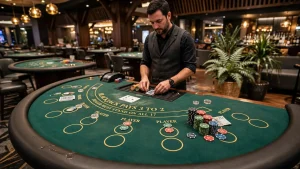
A useful practice session has a small aim. You might focus on recognising the situation in front of you, or on making your decision before the table moves on. Keep attention on the decision, not on how many hands you can get through. If you are distracted, tired, or clicking just to keep the action going, take a break. Practice is meant to build a habit you can use calmly, not to make you chase the next hand.
Free-play modes can let you rehearse without putting money at risk, where available. But they cannot make a game identical to a live table, and a smooth run does not show what will happen when you play for real. Treat “perfect strategy” as a description of a decision approach under particular rules, not a promise that every session will go your way. No magic switch.
I would also keep practice separate from money decisions. Set a budget before any real-money session, and do not raise it to recover a loss. If the game stops feeling like practice and starts feeling like a way to win back what has gone, step away. You can return when you are able to pay attention again.
The best measure is not whether you played quickly or came out ahead. It is whether you can explain your decisions and notice when the table’s pace is pushing you into guesswork. RNG play offers repetition; live dealing offers a more measured, streamed experience. Neither makes you skilled by itself. The work is in paying attention.
Blackjack Switch Means Different Rules
The word “Switch” can make a game sound like standard blackjack with one small extra option. I used to treat variations that way: learn the familiar approach, then assume it would still fit. That shortcut can send you into decisions the original strategy was never built to cover.
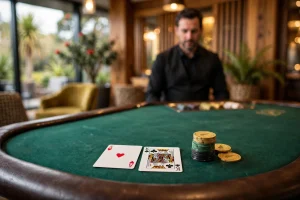
Blackjack variants change the rules, and those changes can affect both strategy and the house edge. So a basic strategy guide for standard blackjack is not automatically a guide to Blackjack Switch. The title alone does not tell you enough. Before you play, open the game’s rules and find out what the variant changes, what choices are available, and how those choices affect the outcome of a hand.
That is less exciting than clicking straight through. It is also where the useful information is.
I would not rely on a familiar-looking table just because the cards and dealer still look like blackjack. A basic strategy table is a recommendation for a particular set of game conditions. If the variant alters the decisions players can make, or changes how a hand is settled, then the reasoning behind a standard recommendation may no longer apply. The chart can still look tidy. Wrong reference, though.
Read the rules for the exact game you have opened, not a general description of the variant. Look for the available actions and any special conditions attached to them. If the rules are unclear, do not fill the gaps with assumptions or copy advice from a standard blackjack guide. A strategy only makes sense in relation to the game it is meant to address.
This matters even if you already understand ordinary blackjack. Knowing when to hit or stand in a standard game does not settle every decision in a variant. The best blackjack strategy is not a universal set of moves; it depends on the rules in front of you. Nor does using a strategy remove the house edge or guarantee a winning session. It can help you make decisions suited to that game, but the variant still matters.
A quick check before you sit down can prevent a more frustrating kind of practice: repeating a move that was sensible somewhere else, then wondering why it feels wrong here. If you want to learn Blackjack Switch, keep its rules and strategy separate from standard blackjack until you have confirmed how the specific version works. Don’t merge the two.
Betting, Payouts, and the Insurance Trap
I used to think a clever betting pattern could rescue a session that was going badly. It couldn’t. Changing the size of your wager may help you control how quickly your bankroll is exposed, but it does not change the cards or turn a losing run into a reliable profit. A sequence of rising bets is still just a sequence of bets.
A practical blackjack betting strategy starts before you sit down: decide what you can afford to lose, set a limit for the session, and stop when you reach it. I’ve found that the hard part is not choosing a number; it’s sticking to the decision after a bad hand. Don’t raise your stake to win back losses. That’s chasing, not a system.
The same goes for claims about a “best strategy” that supposedly makes betting patterns pay. A plan can help you stay within your limits, but no sizing formula guarantees a winning session. Dealer-bust predictions don’t provide a dependable shortcut either. The dealer’s outcome is not something a betting pattern can control. Not a magic switch.
The payout printed in the table rules deserves a close look. A specialist review reports that a natural blackjack may be paid at 3:2 at some tables, while others list 6:5. Those are different terms: for the same stake, the 6:5 payout returns less for a natural blackjack than 3:2. Check the game’s own rules before you play, rather than assuming every table pays alike. A small-looking line in the rules can matter more over a session than a flashy table design.
Insurance is another offer I’d treat with care. It is a separate wager connected to whether the dealer has blackjack, not a way to protect your whole session. For most players, taking insurance is best avoided as a routine bet. It can feel reassuring when the dealer shows an ace, but reassurance is not the same as a sound reason to add another stake.
If you are playing with a bonus, read the fine print and bonus conditions on a trustworthy site before putting money in. Blackjack may contribute differently to wagering requirements, and maximum-bet rules can apply while you are wagering. Missing those terms can leave you with a very different idea of what your balance means.
The question “does a strategy work?” needs a precise answer. A sensible approach can help you make consistent choices and manage your exposure. It cannot promise profit, erase the house edge, or justify betting money you need elsewhere. Set your budget, keep it separate from everyday spending, and walk away when it is gone. Don’t chase it.
What New Zealand’s 2026 Online Casino Changes Mean
The rules around online casinos in New Zealand changed in 2026, but that does not change the decisions in a blackjack hand. A blackjack strategy still concerns how you play against the dealer; the law concerns which providers may offer online casino gambling and under what conditions.
The Online Casino Gambling Act 2026 took effect on 1 May 2026, establishing New Zealand’s first domestic licensing system for online casino gaming. It also set a transition period that runs until 1 December 2026. Providers that were already serving people in New Zealand before the Act began may continue during that window, subject to its transitional provisions. The full licensing regime is expected to be operating in 2027, rather than being fully in place at the start of the transition.
New Zealand Licensing
The Online Casino Gambling Act 2026 established a domestic licensing system. A transition period is running until 1 December 2026, after which the full licensing regime is expected to be operating.
That timing matters. The new framework is not a reason to assume every site available to New Zealanders already holds a local online casino licence. Before the Act, offshore online casino services were not licensed or supervised by a New Zealand regulator, and customers using them had no domestic government recourse. The transition allows certain existing providers to keep operating for now; it is not the same thing as the completed licensing system.
The Department of Internal Affairs is New Zealand’s primary gambling regulator and oversees the online casino licensing framework. The Gambling Commission has a different role within it: it hears and decides casino licensing applications, issues online casino licences, and approves changes to licence conditions. In plain terms, one body oversees the framework, while the Commission makes licensing decisions.
For anyone looking at 2026 blackjack strategy, this is background rather than a new playing method. The legal framework does not make blackjack strategies more reliable, and it does not turn a betting pattern into a sure way to win. I’ve learned not to confuse a new label with a guarantee. Different matter.
The transition also has practical limits for providers. Those already operating before the Act may continue only within the transitional arrangements; providers that have not applied for a licence must stop offering online casino gambling in New Zealand by 1 December 2026. Licensed operators will face stricter age and identity checks, and advertising is subject to tight rules, with sponsorships prohibited.

So, when checking an online casino, don’t treat availability or a familiar-looking blackjack table as proof of local licensing. Read the current terms and conditions carefully, and remember that the new regime is still moving through its transition. A familiar game is not the same as a familiar level of protection.
How an Optimal Strategy Is Built—and What Team Play Adds
Blackjack strategy starts with the hand itself. Number cards keep their face values, picture cards count as ten, and an ace can be worth one or eleven. From there, the player’s choices are to hit, stand, double down or split. A sound approach weighs those options against the chance of improving a hand and the risk of going over.
That is the logic behind what players call optimal strategy: choosing the move that performs best over repeated hands under the rules being played. It is not a promise that a particular hand will go your way. A sensible decision can still lose; that used to be the part I found hardest to accept. One result tells you little about whether the choice was sound.
So how was this approach devised? By analysing the possible card combinations and decisions, then comparing the likely outcomes of each available move. The result is a set of recommendations for particular situations, often presented in a blackjack strategy table. It is a decision aid, not a prediction of the next card and not a system for forcing a win.
Team play adds coordination between people, but it does not change the basic choices each player faces. At a table, players can agree on a shared approach before play, keep decisions consistent and avoid turning every hand into a debate. That can make the experience calmer. It cannot make another player’s choice control your cards or guarantee that the group finishes ahead.
I’ve seen the word “team” used as if it means a secret edge. Often, what it really means is that people communicate and stick to a plan. Useful, perhaps. Magic, no.
There is a practical distinction here: a player’s strategy concerns what to do with their own hand, while a blackjack team strategy concerns how participants organise themselves. The first is about decision quality; the second is about coordination. Neither removes chance, and a group should not treat confidence or agreement as proof that a move is correct.
The best starting point is modest: understand why a decision is recommended, rather than copying it blindly or expecting it to settle every argument. Strategy can reduce avoidable mistakes. It cannot promise a winning session.
Advanced Play: Counting Cards, With Limits
Card counting is a mental way of keeping track of how the cards already dealt may affect the mix left to come. It is not remembering every card in order, and it is not a secret signal that tells you what the next card will be. At best, it gives a player a rougher picture of the remaining cards while a game is in progress.
The idea starts with blackjack’s card values. Number cards count at face value, face cards count as ten, and an ace can count as one or eleven. A counting system groups cards by their general effect on the remaining mix, then adjusts a running total as cards appear. A positive or negative count is an estimate, not a prediction. You can still be wrong about what comes next.
That distinction matters. I used to hear “winning strategy” and imagine a move that could turn uncertainty off. Counting does not do that. It cannot guarantee a win, rescue a poor decision, or make every hand favourable. It is separate from a blackjack strategy card, which tells you what action is suggested for a particular hand and dealer situation. A count, by contrast, tries to describe the changing composition of the cards in play.
What counting can and cannot tell you
A count only has meaning while the cards dealt and the cards still available are connected within the same game. A human player has to notice exposed cards, keep the mental tally, and avoid letting the changing pace or distractions knock it off track. That is a lot to manage while also making decisions and keeping an eye on your bet. Faster is not the same as more accurate.
Even when the count is kept correctly, it does not identify the next card. It can indicate that the remaining mix may be more or less favourable in broad terms, but chance remains in every hand. No blackjack counting strategy removes that uncertainty, and no calculator can turn an estimate into certainty. A tool may perform arithmetic, but it cannot create information about cards that have not been dealt.
Is card counting a winning strategy?
No, it is a way to get a rougher picture of the remaining cards. It cannot guarantee a win or remove uncertainty.
Can I count cards in online RNG games?
It is not a sound application because software reshuffles automatically, meaning cards from previous hands do not provide a dependable picture of what remains.
This is also why searching for a blackjack strategy to win, or a “profit accumulator” system, can send you in circles. A count is not a money-making formula that compounds a result automatically. It does not promise profit, and a scratch-and-win strategy has no bearing on the cards in a blackjack game. Different labels do not change the underlying uncertainty.
Online games are a different case
Online RNG blackjack uses software shuffles and allows faster play than a live-dealer game. If the software reshuffles automatically, cards from previous hands do not provide a dependable running picture of what remains for the next hand. Trying to count across those hands is not a sound application of the technique. Faster rounds can make the temptation to keep a tally stronger, but speed does not make the tally useful.
Live-dealer blackjack uses actual cards, so the physical sequence is visible as cards are dealt. That makes the setting different from an RNG game, but it still does not make counting easy or turn it into a blackjack strategy winning guarantee. Streaming delays can also affect the pace, and the mental task remains yours. I would not confuse seeing real cards on screen with having control over the outcome.
As for legality, using mental calculation to count cards is not illegal under New Zealand law. That is a narrow point about the act of counting; it is not a promise that counting will work, or that a player can dictate how a game unfolds. Keep those ideas separate.
If you are curious, treat counting as a demanding exercise in attention rather than a shortcut. Set a budget before playing, and do not chase losses because a running count seems encouraging. The count can be mistaken, the next hand is unknown, and a losing session does not become a winning one just because you kept score. No magic switch.
Advanced Strategy Tables: Use the Right Reference
A more detailed blackjack reference can be useful when you want a prompt beside you rather than relying on memory. I’ve found a printable table handy for checking a decision without breaking the flow of a session. But a tidy PDF is not automatically the right one. Its recommendations only make sense for the game rules it was built around.
Before using a table, compare its assumptions with the rules shown at your table or in the game information. A specialist review notes that games can differ in deck count, whether the dealer takes a card on soft 17, surrender availability and the payout for a natural blackjack. Those details can change which recommendation fits. Don’t assume a chart labelled “advanced” has accounted for the rules you’re facing.
Check that the reference also covers the choices the game actually permits. Depending on the table, you may be able to hit, stand, double down, split or surrender. If a move is unavailable, a chart recommending it won’t help you decide what to do instead. I’d rather use a plain reference that matches the table than a polished one with a broader title.
A PDF can be practical, but check when and for which rules it was made before saving or printing it. If the table doesn’t clearly state its assumptions, treat it cautiously. You don’t need to memorise every cell; use it to confirm a decision, then return your attention to the game. A reference is a reminder, not a promise that a hand will go your way.
I used to keep a chart open and trust it because it looked authoritative. That was backwards: the useful question is whether it describes this game, not whether it looks expert. Match first. Then consult it.
Casino Games in New Zealand: Roulette, Blackjack & More
Content created by the «casinoslotnz.com» team