
Check the POLi Terms Before You Deposit
 Available in US
A payment option alone does not confirm casino availability or bonus eligibility; current casino terms determine what can be combined.

Poli Deposits, Small Payments and Bonus Conditions
A small deposit can look like the sensible way to try an online casino without committing much. The catch is that the amount you have in mind, the payment method you want to use and a welcome offer are three separate things. Seeing them mentioned together does not prove that a casino lets you combine them.
I would not treat a POLi deposit as eligible for a bonus unless the casino’s own current terms say so. That is not a minor detail: an offer can look available on a promotions page while its terms exclude some payment methods, or make eligibility depend on how you register or deposit.
“Free bonus” is the sort of phrase that makes me slow down. It sounds like something you can collect without consequence; the actual conditions may say otherwise. Before opting in, read the offer terms for the qualifying payment method, any required deposit, the games that count and the steps needed before winnings can be withdrawn. If a condition is unclear, do not fill the gap with an assumption that POLi will qualify.
If you’re choosing a New Zealand casino and looking for POLi, check whether that payment method is currently available before signing up. This list offers a concise starting point using the operator details provided.
-
BitStarz
- License
- Curaçao Gaming Authority, licence no. OGL/2024/165/0185
BitStarz lists a Curaçao Gaming Authority licence, number OGL/2024/165/0185. You can use that detail as one point to check when assessing the operator.
-
Neospin
- License
- Tobique Gaming Commission, licence no. 0000064
Neospin lists a Tobique Gaming Commission licence, number 0000064. You can take this licensing detail into account when considering the operator.
-
Lamabet
- Payout speed
- 1-3 business days
Lamabet has a stated payout speed of 1–3 business days. You can consider that timeframe when reviewing its cash-out information.
-
Ricky Casino
- License
- Tobique Gaming Commission, licence no. 0000002
Ricky Casino lists a Tobique Gaming Commission licence, number 0000002. You can use this as a reference point when reviewing the operator.
-
7Bit Casino
- License
- Tobique Gaming Commission, licence no. 0000091
7Bit Casino lists a Tobique Gaming Commission licence, number 0000091. You can take the stated licence detail into account when assessing it.
-
Play Grand
- License
- Malta Gaming Authority, licence no. MGA/B2C/370/2017
Play Grand lists a Malta Gaming Authority licence, number MGA/B2C/370/2017. You can use this information as one part of your review.
-
N1 Casino
- License
- Malta Gaming Authority, licence no. MGA/B2C/394/2017
N1 Casino lists a Malta Gaming Authority licence, number MGA/B2C/394/2017. You can consider this stated licence detail when reviewing the operator.
-
Wintino
- Payout speed
- 1-3 business days
Wintino has a stated payout speed of 1–3 business days. You can factor that timeframe into your review of its cash-out arrangements.
-
Zotabet
- License
- 07017519840
- Payout speed
- 1-3 business days
Zotabet lists licence number 07017519840 and a payout speed of 1–3 business days. You can use these stated details as starting points for your review.
Keep the deposit and the offer separate
If you are looking for a low-cost way to start, decide first what you are willing to spend without relying on a promotion. Then check whether the cashier actually presents POLi as an available method for your account and whether the stated minimum suits you. A payment method appearing in general help material is not the same as a working option in the cashier.
After that, read the bonus terms independently. Check whether the offer is automatic or requires you to opt in, whether a deposit is required, and whether the terms name exclusions. Do not assume that a small payment will unlock a bonus simply because the promotion is described as welcoming new players. “Easy bonus” often means easy to notice, not easy to claim.
There is another distinction worth keeping clear: a no-deposit bonus and a bonus linked to a deposit are not the same offer. The first description suggests that no payment is needed to receive the promotion; the second depends on a qualifying deposit. Neither phrase confirms that POLi is supported, or that a particular account qualifies. Read the wording in the actual offer, not just the headline.
I have made the mistake of treating a promotional banner as the whole deal. It is not. The terms are the deal.
What a small payment can and cannot tell you
A low minimum, if a casino states one, tells you only what it may accept as a deposit under its terms. It does not establish that the payment method is available to you, that the deposit qualifies for a promotion, or that bonus funds can be withdrawn on the same conditions as cash funds. Those details need to be checked separately.

Pay attention to how the offer defines a qualifying deposit. It may refer to a particular method or exclude certain methods; if the wording does not clearly answer whether POLi counts, do not assume it does. Also check whether opting into an offer changes the rules for the funds you deposit. A bonus can add conditions that would not apply to a deposit made without it.
This is the point where “small” can be misleading. A modest starting amount does not make complicated bonus conditions harmless. If the terms are hard to find, incomplete or inconsistent with what the cashier shows, pause rather than depositing to find out. You should be able to understand what you are accepting before you pay.
For New Zealand readers, the legal setting is also changing. The Online Casino Gambling Act 2026 took effect on 1 May 2026 and created the country’s first domestic licensing framework for online casino gambling. During the transition, providers already serving New Zealand customers before that date may continue until 1 December 2026, subject to the Act’s transitional provisions. The full licensing regime is expected to be operational in 2027. That context does not confirm a payment option or a bonus, so it should not be mistaken for endorsement of a particular offer.
A practical pause before opting in
Before making a deposit, make sure you can answer three plain questions from the casino’s current information: Is POLi shown as available in the cashier? Does the stated minimum fit the amount you intend to deposit? Do the promotion’s terms explicitly say whether that method qualifies? If you cannot answer the last question, treat the bonus as unconfirmed and do not count it as part of your plan.
Do
- Check if POLi is available in the cashier
- Verify if the minimum deposit suits your budget
- Read the promotion's terms for explicit payment eligibility
Don't
- Assume a bonus applies to POLi without confirmation
- Rely on promotional banners as the complete deal
- Fill gaps in unclear conditions with assumptions
Keep screenshots or a copy of the terms you read, especially if the offer wording changes between the promotions page and the cashier. That will not make unclear conditions clearer, but it gives you a record of what was displayed when you made your decision. If the casino cannot explain an eligibility condition plainly, I would rather skip the offer than risk finding out after depositing.
The careful approach is not exciting, and that is precisely why I prefer it. Do not deposit on the strength of a headline, and do not assume a small payment guarantees access to a bonus. Check the cashier and the offer terms first. No guesswork.
What to Check Before Paying with Poli
A payment button can look reassuringly clear, but it does not tell you everything you need to know. Before you use Poli at an online casino, separate what the cashier actually shows from what you hope it means. I would not treat a familiar logo, an old review or a search result as confirmation that a payment route is currently available for my account.
Start with the cashier on the casino website you are using. Is Poli listed as a way to deposit? Does selecting it take you to a clear payment step, or does the option disappear when you sign in or choose a payment amount? I cannot confirm how a Poli payment is authorised or what information a particular casino may request. So do not assume that the process, eligibility or account checks will match another site’s description.
Then read the operator’s payment terms before committing. Look for wording about deposits, withdrawals, fees, refunds and the handling of payment disputes. The terms should make clear which rules apply to the payment method you intend to use. If a page says something broad, while the cashier shows something different, pause rather than guessing which one wins. That small check can save a larger headache.

“Easy payment” is a sales phrase, not an explanation. What matters is whether you understand what happens after you select the method: what confirmation you receive, where to look if the casino balance does not update, and which support channel handles a payment issue. If those points are unclear, do not send money just to see what happens. I have learned that curiosity is a poor substitute for a clear process.
Keep the payment route and the casino account in view together. Check that you are signed in to the account you mean to use, that the amount shown at the final step is the amount you intended, and that you can recognise the transaction in your own payment records. Those are basic checks, not a claim about Poli’s specific interface. Never rely on a button label alone if the details on the confirmation screen do not match.
Promotions need a separate check. A casino may describe an offer prominently without making every payment method eligible for it. Read the offer’s actual terms and look for any payment-method exclusions before accepting it. Do not infer that Poli qualifies because the bonus appears beside the cashier, or that a deposit made with it will count toward an offer. If the terms do not answer that question plainly, treat the offer as uncertain and ask the operator before paying.
The same caution applies if you expect to withdraw later. A deposit option does not, by itself, establish that the same method can be used for a payout. Before depositing, find the casino’s withdrawal rules and understand what they say about payout routes and account checks. I cannot tell you that Poli withdrawals are supported, or how one would be processed. Better to know what the operator states than to discover a restriction after a win.

There is also a New Zealand legal context to keep in mind. The Online Casino Gambling Act 2026 took effect on 1 May 2026 and created a transition period that runs to 1 December 2026. During that period, online casinos that were already serving people in New Zealand before the Act began may continue operating until the transition ends. The full domestic licensing system is not expected to be operating until 2027. These changes do not tell you whether a particular cashier supports Poli; they do mean that a payment label should not be mistaken for a guarantee about oversight or recourse.
My own rule is plain: verify the option in the cashier, read the relevant terms, and stop if the payment or bonus conditions remain murky. No guesswork.
Finding Mobile Casinos That Accept Poli
A casino can work well on a phone and still offer no Poli option. Those are separate claims, and I would not treat a mobile-friendly page as proof that the payment method is supported. Likewise, seeing Poli mentioned somewhere on a site would not tell me whether it is available in the mobile cashier, for a Kiwi user, or on the particular device I am using.
That distinction matters because “mobile casino” can mean a website opened in a phone browser or an app. A payment option may be presented differently across those versions. I would check the version I actually plan to use rather than assume that the desktop cashier, an app listing, or a general payment logo tells the whole story. A logo is not a confirmation.

When checking a casino on a phone, I would look for the payment methods shown in its own cashier and read the related terms before going further. If Poli is not clearly listed there, I would ask the operator whether it is available to New Zealand customers using that mobile version. I would want a direct answer about both the method and the device or channel in question, not a vague reply that the site supports “local payments”. Keep a record of the answer if it affects your decision.
I have learned not to let a polished screen do the thinking for me. “Seamless” can mean the page looks tidy; it does not settle whether a particular payment route is available. Nor does a casino’s general mobile compatibility establish that every cashier function works the same way in a browser and an app. If the terms are unclear, pause instead of filling in the blanks yourself.
New Zealand’s legal setting is also changing. The Online Casino Gambling Act 2026 took effect on 1 May 2026 and created the country’s first domestic licensing framework for online casino gaming. During the transition, providers already serving people in New Zealand before that date may continue until 1 December 2026, subject to the Act’s transitional rules. The complete licensing regime is not expected to be operational until 2027. That changing framework is another reason not to read a payment logo or mobile page as a full account of a casino’s status.
For a phone-based check, I would keep the questions narrow:
- Does the operator explicitly list Poli as an available method for customers in New Zealand?
- Is it shown in the mobile cashier I would use, rather than only in general site information?
- Do the payment terms say anything about availability by app, browser, or device?
- If the answers conflict, can the operator clarify before I create an account or try to pay?
These are questions to resolve with the operator, not assumptions to make from a search result or a site’s design. I would also distinguish “the site opens on my phone” from “the payment option is supported there”. One is about access to a page; the other is a specific claim about the cashier.
There is no reliable shortcut in the phrase “mobile casinos that accept Poli”. It sounds like a neat category, but it combines two things that need separate confirmation: mobile access and Poli acceptance. Until both are clear for the specific casino and the way you intend to access it, I would not describe it as a confirmed mobile Poli option. That is less exciting than a list. It is also less likely to steer you into a payment decision based on guesswork.
Paying Online with Poli: What the Search Does—and Doesn’t—Confirm
When you look for an online casino where Poli might be a way to pay, the wording can make the result feel more definite than it is. A page mentioning Poli is not the same thing as a working payment option at its cashier. And a casino described as accepting a method may not offer it to every visitor or in every situation.

I’ve learned to treat payment labels as a starting point, not a promise. The useful question is not just whether a site mentions Poli, but whether the payment option is actually presented for your account when you are ready to use it. Until then, “accepts Poli” is just a claim on a page. That distinction matters.
Online payment is also only one part of the picture. A casino’s payment arrangements, account rules and eligibility conditions are separate things. Seeing a method named does not establish that deposits and withdrawals both work through it, or that the option will appear for a Kiwi user. I would not fill in those gaps from a logo, a search snippet or a broad “pay online” description.
That is where “best” can mislead. It sounds like a comparison has already been made, but a ranking is only useful if it rests on current, relevant details. A list built around the word Poli does not, by itself, prove that any named casino offers the method. Nor does it tell you whether a payment claim applies to the website you are visiting, your account, or the particular transaction you have in mind. Fancy label. Thin evidence.
New Zealand’s legal setting is changing, so timing matters too. The Online Casino Gambling Act 2026 took effect on 1 May 2026 and created the country’s first domestic licensing framework for online casino gambling. During the transitional period that runs to 1 December 2026, providers that were already serving people in New Zealand before the Act began may keep operating under the transition rules. The full licensed regime is not expected to be in place until 2027.
That transition does not turn every online casino into a New Zealand-licensed operator, and it does not verify a payment method. Before this framework, offshore online casino gambling was not under the oversight of a New Zealand regulator; customers had no domestic government recourse if a dispute arose. The change in law is important context, but it is not a payment guarantee.
I would keep the two questions separate: what legal position applies to the operator, and what payment options are actually available to you. One cannot answer the other. A site’s reference to Poli does not establish its regulatory status, and a legal change does not confirm that Poli is supported.
If a page uses confident wording, look for a clear, current statement on the operator’s own site rather than relying on a snippet copied elsewhere. Then make sure the same information is visible before you commit to a transaction. If the method is absent or the wording is vague, do not assume it will appear later. I would rather pause than make a money decision based on a label that may describe an old page, a different service or an option that is not available to my account.
This is not a recommendation to choose any casino on the strength of a payment claim. It is a way to read one carefully. A search for online casinos that take Poli can point you toward a question worth checking; it cannot settle that question for you. Keep the claim narrow, verify it at the point of use, and treat anything less as unconfirmed. No leap of faith.

Before You Treat a Casino as a Poli Option
A casino’s payment page can make a method look available before you know whether it is available to you. I have learned not to treat a logo, an old review or a search result as proof that a Kiwi user can actually deposit with POLi. The useful question is narrower: does this operator currently offer POLi to customers in New Zealand, and does the option appear for your account?
That distinction matters because a payment method can be mentioned somewhere on a site without being enabled at the point of payment. Availability may depend on the operator’s current arrangements and the customer’s location. So a page calling itself a casino that accepts POLi is a starting point, not a reason to assume the cashier will show it.
I used to let a familiar payment logo do too much work. It looked like confirmation; it wasn’t. Check the operator’s own payment information, then look at the cashier before committing to an account or a deposit. If the method is not listed there, do not assume a similarly named option is the same service. Ask the operator directly if the information is unclear, and keep the reply. A confident headline is easy to publish. A clear answer about availability is more useful.
There is also a changing legal backdrop in New Zealand. The Online Casino Gambling Act 2026 took effect on 1 May 2026 and created the country’s first domestic licensing framework for online casino gaming. During the transition, providers that were already serving people in New Zealand before that date may continue until 1 December 2026, subject to the Act’s transitional provisions. The full licensing system is not expected to be operating until 2027.
That transition does not turn a payment logo into proof of a casino’s status or its POLi support. Nor does it mean every operator has the same position. Domestic online casinos remain prohibited under the Gambling Act 2003, while the new Act sets out a path to a domestic regime. Before the Act, offshore online casino services were not licensed or supervised by a New Zealand regulator, and customers had no domestic government recourse if something went wrong. The rules are shifting; old descriptions can fall behind.
If you are comparing online casinos that appear to offer POLi, keep the checks separate. First, establish whether the operator currently serves New Zealand customers under the transition. Then confirm POLi is actually offered to your account. Finally, read the operator’s own terms before acting. None of those checks can be replaced by a “best” label or a list copied from another page.
I would not call a site a genuine POLi option just because a third party says it is one. Payment choices change, and a casino’s general payment page may not reflect what a particular customer sees. A direct, current confirmation is the sensible threshold. No guesswork.
This is not a recommendation to register or gamble. New Zealand’s transition rules also restrict advertising online casino services to people in the country. Treat payment claims as information to verify, not an invitation. The practical point is simple: casino availability and POLi availability are separate questions, and both need a current answer before you rely on either.

Searching for a Casino Poli Option in New Zealand
A Kiwi user looking for a casino that takes POLi can easily mistake a familiar payment name in a page title for confirmation that the cashier actually offers it. I would not. A heading about “best” casinos is a sales claim until the payment option is shown for the specific site and is still available when you go to pay.
The short version is that a casino’s presence in New Zealand search results does not establish POLi support. Nor does a general payment-method page prove that a particular casino accepts it. I’ve learned not to treat a neat-looking label as the same thing as a working option. Check the operator’s own current cashier information before making a decision. Still not proof.
New Zealand’s rules are also changing, so the date matters. The Online Casino Gambling Act 2026 took effect on 1 May 2026 and created the country’s first domestic licensing framework for online casino gaming. During the transition, providers that were already serving New Zealand customers before that date may keep operating until 1 December 2026, subject to the Act’s transitional provisions. The full licensing system is expected to be operating in 2027, while unlicensed operation is expected to become an offence around mid-2027.
That transition does not turn a payment claim into a verified one. Before the Act, offshore online casinos were not licensed or supervised by a New Zealand regulator, and customers had no domestic government recourse if something went wrong. Offshore sites remain practically accessible, and a player is not liable to a fine or prosecution simply for playing with one. Those points are separate from whether a casino supports POLi, or what protections a particular operator provides.
I’d also keep an eye on how a site is presenting itself. Advertising online casino gambling to people in New Zealand is prohibited during the transition period. That makes loud promises about a “top” or “trusted” POLi casino a poor substitute for clear, current information. I’d rather see the payment option stated plainly in the operator’s own materials than rely on a ranking phrase or a copied badge.
If you’re weighing a New Zealand POLi casino option, separate the claims: the casino serves customers in the country; its current payment page lists POLi; and the conditions shown there apply to your account. One claim does not establish the others. I would not assume that an old page, a search snippet, or a logo proves present availability.
That is less exciting than a ready-made shortlist, but it is more useful than pretending one exists. A casino name beside POLi is only a lead to check, not a recommendation and not confirmation. Until the operator clearly shows the option at the point of payment, I’d keep the claim unproven.
Poli Pay at a Casino: Availability Still Needs Confirmation
“Poli Pay” can sound like a clear checkout option. I’d still treat it as a label to verify, not proof that a casino accepts this payment method. A page mentioning POLi, or a general list of payment options, does not tell you whether it is available in the cashier when you try to deposit.
For a Kiwi user, the useful check is specific: does the operator currently show POLi as an available payment choice for your account and location? Look in the casino’s own cashier and payment terms, rather than relying on an old review or a search result. If the option is absent, don’t assume that a similar-sounding service or a logo on another page means the same thing. Small detail. Big difference.
I’ve learned not to treat “supported” as a complete answer. It can leave open whether the method is available to New Zealand customers, whether it applies to casino payments, or whether the information is still current. Before entering payment details, make sure the cashier identifies POLi itself and the operator explains any relevant conditions. If the wording is vague, ask the operator for clarification before proceeding.

There is also a New Zealand regulatory change worth keeping in view. The Online Casino Gambling Act 2026 took effect on 1 May 2026 and created the country’s first domestic licensing framework for online casino gambling. During the transition, which runs from that date until 1 December 2026, providers that were already serving people in New Zealand before the Act began may continue operating. The full licensed regime is expected to be in place in 2027. That legal context does not establish whether any casino accepts POLi Pay; payment availability and regulatory status are separate things.
So if you’re considering a casino that appears to offer POLi Pay, check the current cashier, the operator’s terms and the status of its service in New Zealand. Don’t read a payment-method label as a promise. No assumptions.
Real-Money Poli Casino Searches in New Zealand
When you are looking for a real-money casino and want to pay with POLi, two separate things need checking: whether the operator accepts players in New Zealand, and whether POLi appears as a supported payment method for that operator. A site mentioning one does not establish the other. I learned to treat payment logos and broad labels as a starting point, not proof that a particular deposit route will work.
The real-money part matters too. A game site may offer free-play content without taking deposits or paying out winnings; that is not the same thing as a real-money casino. Before making a decision, read the operator’s current terms and payment information, and make sure you understand what service is being offered. “POLi available” sounds clear. The actual cashier is what counts.
New Zealand’s rules are also in transition. The Online Casino Gambling Act 2026 took effect on 1 May 2026 and created the country’s first domestic online casino licensing framework. Providers that were already serving New Zealand customers before that date may continue during the transition, which ends on 1 December 2026. The complete licensed regime is not expected to be operating until 2027. That means a Kiwi user should not assume that a site’s presence, payment options or regulatory position will stay unchanged.
I would keep the decision practical: confirm that the operator currently serves New Zealand, then check its own cashier and terms for POLi, and separately understand the rules applying to its operation. Don’t infer real-money access from a search result, a logo, or a payment method listed elsewhere. Details can change. Check the actual account flow before committing money.
And set your own limit before you start. Real-money gambling can cost more than you intend, especially when the payment step feels routine. If it stops being recreational, Gambling Helpline NZ is available for support.
A $5 Poli Casino Deposit: No Verified Terms to Rely On
A five-dollar figure in a search or promotional snippet is not proof that a casino will accept that amount, or that it will accept Poli. I would not treat “small deposit” as a term until it appears in the casino’s own current cashier and conditions. The wording can sound definite while leaving the important part unresolved.
Before making a decision, look for the minimum deposit stated for the exact payment option, not just a general minimum for the account. If Poli is not shown in the cashier, or the amount is unclear, don’t assume the payment will go through at that figure. And if the terms conflict with the cashier, pause rather than guessing. A failed payment is a poor way to settle a question.
That still does not make a five-dollar Poli deposit available. It means the amount and method need to be confirmed together by the operator before you act. I’ve learned not to let a neat number do the work of actual terms. “Only five dollars” sounds reassuring; it tells you nothing unless the casino says it applies to Poli.
The sensible call is simple: rely on the displayed, current conditions, not on the number in a headline. No clear match, no assumption.
Casinos Using Poli: What Can Be Verified
A casino mentioning POLi somewhere on its site is not the same as a working POLi option in its cashier. I’ve learned to treat payment badges as a starting point, not a promise: the method shown in a general list may not appear when you try to fund an account.
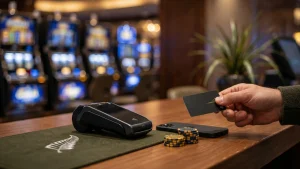
For a casino using POLi, the useful check is specific. Open the cashier and see whether POLi is offered for your account, then read the payment terms before choosing it. Those terms should make clear what happens if a payment is declined and whether the method can be used for the transaction you have in mind. If the details are unclear, ask the operator to confirm them in writing before you proceed.
“Accepted” can sound reassuring. It still leaves practical questions unanswered. A payment option might be displayed but unavailable for a particular account or transaction, so I wouldn’t rely on a logo or an old mention elsewhere. Check what the operator currently presents to you.
Better to pause than to deposit on an assumption. That’s the dull bit.
Can I withdraw casino winnings to Apple Pay?
Yes, if the casino supports Apple Pay withdrawals. Winnings are returned to your deposit method up to the amount you deposited; any excess is paid by another method.
Can NZ players withdraw to Apple Pay?
Yes, if the casino offers Apple Pay withdrawals for your account. Availability can vary by operator, website or app, and device.
How fast is an Apple Pay payout?
After the operator approves it, a card credit commonly takes around two to four business days, sometimes longer, and moves only on New Zealand banking days. Approval itself can take from under an hour to several days.
Payments at New Zealand Online Casinos
Content created by the «casinoslotnz.com» team