
Know What a Slot Spin Can—and Can’t—Tell You
 Available in US
A practical guide to reading slot claims, understanding game odds and avoiding the belief that a losing streak makes a win due.
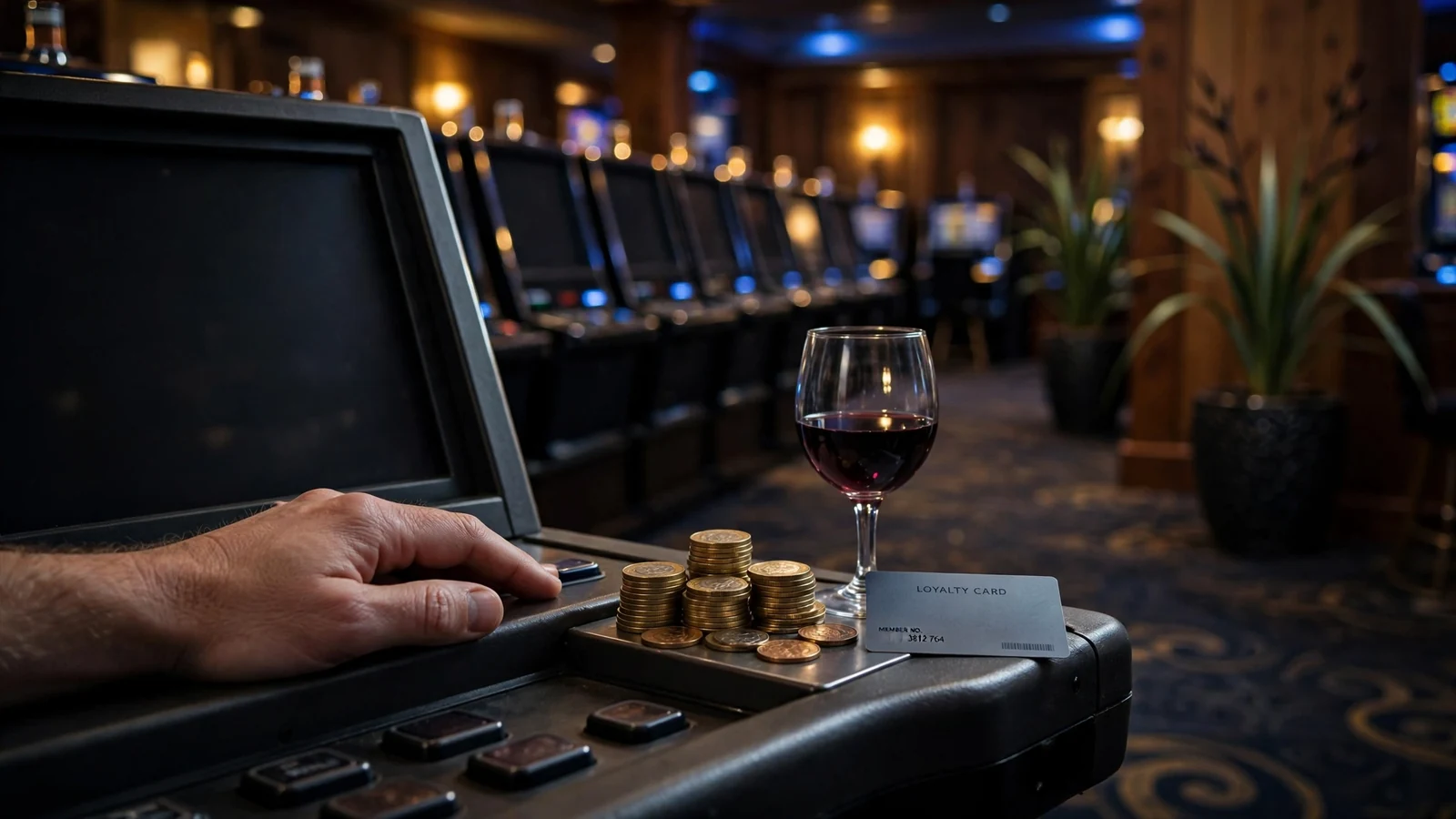
What a Slot Spin Can—and Can’t—Tell You
I used to treat a losing run like a message from the machine: surely it had paid enough people already, so my turn must be close. That feels persuasive when you’re watching the same reels go by and your balance is shrinking. But it doesn’t tell you what the next spin will do.
Each spin is independent. A run of misses doesn’t build up a debt the game has to repay, and a previous win doesn’t make another one less likely on the next press. The game isn’t keeping score in the way a person does. “It’s due” is a story we attach to a sequence, not a signal that a win is coming.
That matters if you’re looking for a reliable way to win at casino pokies. There isn’t a pattern in a short run of results that turns the next spin into a sure thing. I’ve made the mistake of staying longer because I thought I was close to a turnaround. All I knew for certain was that I’d already lost more time and money. Not a strategy.
Choosing a slot casino in New Zealand means checking the details that matter to you before you play. Use this list as a starting point, and verify current terms and availability yourself.
-
BitStarz
- License
- Curaçao Gaming Authority, licence no. OGL/2024/165/0185
BitStarz lists a Curaçao Gaming Authority licence, number OGL/2024/165/0185. This gives you a specific licensing detail to check when considering the operator.
-
Neospin
- License
- Tobique Gaming Commission, licence no. 0000064
Neospin lists a Tobique Gaming Commission licence, number 0000064. You can use that licence information as a reference when reviewing the operator.
-
Lamabet
- Payout speed
- 1-3 business days
Lamabet lists a payout speed of 1–3 business days. That gives you a stated timeframe to consider when reviewing its payment information.
-
Ricky Casino
- License
- Tobique Gaming Commission, licence no. 0000002
Ricky Casino lists a Tobique Gaming Commission licence, number 0000002. You can check this licensing detail as part of your review.
-
7Bit Casino
- License
- Tobique Gaming Commission, licence no. 0000091
7Bit Casino lists a Tobique Gaming Commission licence, number 0000091. This provides a specific licensing detail for you to verify.
-
Play Grand
- License
- Malta Gaming Authority, licence no. MGA/B2C/370/2017
Play Grand lists a Malta Gaming Authority licence, number MGA/B2C/370/2017. You can use the licence details when assessing the operator.
-
N1 Casino
- License
- Malta Gaming Authority, licence no. MGA/B2C/394/2017
N1 Casino lists a Malta Gaming Authority licence, number MGA/B2C/394/2017. This is a specific detail you can check when considering the operator.
-
Wintino
- Payout speed
- 1-3 business days
Wintino lists a payout speed of 1–3 business days. This gives you a stated timeframe to review alongside its other payment terms.
-
Zotabet
- License
- 07017519840
- Payout speed
- 1-3 business days
Zotabet lists the identifier 07017519840 and a payout speed of 1–3 business days. You can check the identifier and stated timeframe when reviewing the operator.
A quiet stretch is still possible
Volatility is one way to think about the shape of possible results, not a forecast for your session. A lower-volatility game tends to pay smaller amounts more regularly. That can make play feel less lurching, but regular payouts don’t mean you’ll finish ahead: a payout may be small, and it doesn’t erase the uncertainty of what comes next.
A higher-volatility game can have longer quiet stretches, with larger payouts among its possible results. That means you may see little happen for a while. It does not mean a bigger payout is waiting just around the corner. The longer the gap feels, the easier it is to mistake waiting for progress.
I’ve found that this distinction matters more than a game’s dramatic graphics or a “big win” banner. If frequent small returns suit your patience better, lower volatility may feel less tense. If you choose a higher-volatility game, be honest with yourself about whether you can stop during a long dry spell. Neither choice changes the independence of the spins.
The important word is “possible.” A game can have a payout pattern associated with its volatility and still give you a session that feels nothing like the pattern you expected. Volatility describes the broad character of outcomes, not a schedule. It can’t tell you when a win will land, how long a losing run will last, or whether you’ll get your stake back today.
Don’t let the last spin choose the next one
When I’ve been annoyed by a loss, my first impulse has been to keep playing until the session felt “fixed.” That is chasing the feeling, not reading useful information from the reels. The previous result cannot promise that the next one will compensate for it.

A better question is not “How many misses have I had?” but “Am I still comfortable spending what I planned to spend?” Set a maximum loss limit before you start and stop when you reach it. Decide on that limit while you’re calm, not after a run of losses has made continuing feel like the only way to feel better. Never increase your bets to chase a loss.
It also helps to separate a win from a good decision. A lucky payout doesn’t prove that staying longer was smart; a losing session doesn’t prove you chose badly if you kept to your limit. The outcome can be random even when the decision is sensible. That’s an uncomfortable distinction, but it keeps one result from rewriting the rules in your head.
Pokies are gambling, not a puzzle you can solve by remembering what happened five spins ago. If you’re an adult and choose to play, go in knowing that neither a cold streak nor a few small payouts reveals what the next spin holds. Lower volatility points towards smaller, more regular payouts; higher volatility comes with longer quiet stretches and the possibility of larger ones. Neither offers a route to guaranteed winnings.
So when a losing run starts to feel like evidence, pause. The machine has produced a sequence; it hasn’t made a promise. A spin can show you what just happened. It can’t tell you that the next one will win.
Do
- Set a maximum loss limit before you start
- Stop when you reach your limit
- Decide on limits while you are calm
Don't
- Chase a loss by increasing bets
- Keep playing to try and "fix" a session
- Treat a losing run as evidence of a coming win
Free Play Is for Learning the Reels, Not Testing a Jackpot
I used to treat a free demo like a cheap preview of what a real session might feel like. That was the wrong way to look at it. Free play can show you how a pokie works; it cannot tell you what you would have won if you had been wagering.
The useful part is getting your bearings without putting money in. You can see what the buttons do, how a feature is triggered, what the symbols mean and whether a bonus round involves choices or simply plays out. If the screen gets busy, or a game has rules tucked behind an information button, you can take a moment to work through them. No pressure from a stake ticking away.
That matters more than it sounds. I’ve started games before without understanding what counted as a feature, then spent the session trying to catch up with the rules while the reels kept moving. A demo gives you room to stop, look again and decide whether the mechanics make sense to you. It can also help you work out whether the pace and presentation are enjoyable, rather than relying on a glossy description.
What free play can show
A demo is a way to explore the game’s interface and features. You can try spins, watch how special symbols behave and follow the sequence when a bonus feature appears. If you have never seen a particular mechanic before, that hands-on look can be clearer than reading a block of instructions.
It is also a decent way to notice small practical details: where the game’s rules are, how to adjust the stake controls, and whether animations or sound make the experience hard to follow. I’ve learned that I don’t enjoy some games nearly as much as their artwork suggested. Better to find that out without a wager.

Still, a demo is a demonstration, not a promise. It can help you understand what the game does, but it cannot establish how a real-money session would unfold. A lively demo run does not mean a similar run is waiting when you switch modes. Nor does a quiet one tell you to keep playing until the game “owes” you something.
That distinction is easy to forget when a screen makes every win feel like a little event. I’ve done it myself: watched a bonus round in free play, got carried away, then treated the experience as a reason to expect the same excitement with money involved. It isn’t evidence of that. It’s just a way to see the feature in action.
The jackpot exception
Progressive jackpots are the part to be especially clear about. In demo mode, they do not pay out. A counter or jackpot graphic may be visible, but seeing it on screen is not the same as qualifying for a real prize. Free play cannot test whether you would collect a progressive jackpot, and a demo win on an ordinary feature should not be read as a jackpot result.
That is the limit in plain terms. You can learn the controls and get familiar with the mechanics; you cannot use a free session to test a progressive payout. No jackpot practice.
I now use a demo only to answer modest questions: Do I understand the rules? Can I follow the feature? Do I even like playing this game? If the answer is no, I can move on without having paid to discover it. If the answer is yes, I still don’t mistake familiarity for a forecast. Free play is useful for learning the reels. It is not a rehearsal of a future win.
RTP, Payout Claims, and the Fine Print Behind “Winning Secrets”
A percentage beside a pokie can look like a clue to what will happen if you sit down and play. I used to read figures that way: higher number, better chance of a decent session. That leap is tempting, but RTP is not a forecast for your next run of spins. It describes the share a game returns across its entire lifetime, not a schedule of what any one player will receive.
That difference matters when you see a casino advertise a higher payback percentage or point to payout audits on its website. The claim may sound like a practical edge. It is still a statement about an overall figure, not a promise that the game will pay you back at that rate today. A session can end well below the stated RTP, or above it. The percentage does not tell you which.
What a payout claim actually tells you
RTP stands for Return to Player. Think of it as a long-run measure attached to a game, rather than a target for an individual visit. It gives a broad way to understand the game’s stated return over time, but it cannot tell you how results will cluster within a shorter stretch of play.
I find it helps to separate three things that promotional copy often pushes together: the game’s RTP, a casino’s claim about payback percentages, and the result you personally get. They are related in subject, but they are not interchangeable. An advertised figure does not turn a random outcome into a predictable one.
Some online casinos publish payout percentage audits on their websites alongside claims of higher slot machine returns. That is worth noticing, but the word “audit” is not itself a winning secret. It tells you there is a published audit claim to assess; it does not mean you can infer your own likely result from it. Nor should a headline percentage be treated as evidence that one session will be kinder than another.
Read the wording, not just the headline
When a casino puts a percentage in a prominent spot, pause before letting the number do all the talking. Ask what the claim refers to: a particular game, or a broader set of games? Is the audit information presented with the claim, or is the page relying on a short promotional line? The wording matters because a broad statement about payback is not necessarily a statement about the exact pokie you plan to play.
I’m not suggesting that every percentage claim is false. I am saying that promotional language can make a long-run measure feel personal and immediate. “Higher returns” sounds like a reason to expect a better night; the actual meaning is narrower. A lifetime percentage cannot promise a result on your next spin, and a published audit does not rewrite that limit.
The same goes for the supposed secrets to winning casino pokies. There is no percentage that lets you time a payout or know when a machine is ready to pay. RTP can help you understand what a game’s return claim is describing, but it is not a method for controlling the outcome. If a page presents it as one, I treat that as sales language, not a system.
So read the number as context, not instruction. Look at the exact wording around it, and keep the distinction clear between a claim about a game’s long-run return and what may happen during your own play. Useful context. Not a crystal ball.
Playing Online: Browser Games, Reviews, and What to Check
A casino game that opens in a browser does not require you to install software on your computer. You visit the site and play there. That is the practical difference from a download-based service, where a separate client is needed to play and wager. It is an access method, not a quality mark: a game opening in a tab tells you nothing by itself about the operator behind it.
I used to treat a smooth-looking page as a kind of reassurance. It isn’t. A tidy lobby, polished graphics and a confident “trusted” badge are presentation, not proof of who runs the service or what rules apply. Browser access can make it feel as if you are only trying something out, but if the site lets you wager, real-money terms still matter.
Reviews can help you spot what to investigate, but I would not let a glowing verdict make the decision for me. A review may describe the range of games or explain how the site presents its terms; its enthusiasm does not establish that the operator is authorised to serve people in New Zealand. That is the part to verify independently, using the Department of Internal Affairs’ information on the licensing framework and the operator’s stated legal status. The rules are changing, so old review pages may not describe the current position.
No badge does the checking for you.
Before you create an account or put money in, look for clear terms that match the service you are actually using. The operator’s identity and legal status should be stated plainly, not buried beneath broad claims such as “safe” or “trusted”. Read the terms governing deposits, withdrawals, account closure and any offer attached to your account. If a review praises a bonus but skips the conditions, treat that praise as incomplete. A casino bonus can come with a requirement to wager before funds can be withdrawn; the offer’s own terms are where you need to see what applies.
Also notice whether a review separates fact from opinion. “Easy to use” is a reviewer’s impression. A description of what the site says about its rules is something you can compare with the operator’s own terms. If the review repeats promotional phrases without showing how it reached its conclusion, I would keep looking rather than treating the rating as evidence.
For a browser-based casino, check the web address carefully and make sure the terms you read belong to the same service you are considering. A review can point you towards a name, but it cannot confirm that a similarly named page is the same operator. Don’t assume that a familiar logo, a search result or a page that loads quickly settles the question.
There is a legal reason to be careful about that distinction in New Zealand. The domestic online casino framework is in transition, and the Department of Internal Affairs is the regulator named for it. So a review written before the change may be stale, while a page using licensing language may not tell you whether that claim applies under the current arrangements. Check official information rather than relying on the review’s wording.
Adults only. If the operator’s status or terms are unclear, the sensible move is not to register and find out later. Browser access removes the software installation step; it does not remove the need to understand who is offering the game and on what terms.
New Zealand’s Online Casino Licensing Transition
The rules around online casinos in New Zealand are changing, but “licensed in 2026” can give the wrong impression if it sounds like the full system is already operating. A specialist review describes the domestic licensing regime as beginning its rollout in 2026; the legal timetable is more specific. The Online Casino Gambling Act 2026 took effect on 1 May 2026, starting a transition rather than an immediate switch to a fully operational licensing market.
The Department of Internal Affairs is responsible for the framework. Under the transition, online casinos that were already serving people in New Zealand before 1 May 2026 can continue to do so until 1 December 2026, subject to the Act’s transitional provisions. That is not the same as saying every site available to New Zealanders has a New Zealand licence. The full licensed regime is not expected to be operational until 2027.
That distinction matters when you are weighing up claims about the best casinos with pokies for New Zealand players in 2026. A site being reachable, or having operated before the law changed, does not by itself establish that it holds a domestic licence. Before the new framework, offshore online casino gambling was not licensed or supervised by a New Zealand regulator, and customers had no domestic government recourse if something went wrong. I would not treat a polished local-facing page as proof of regulatory status.
There is a legal distinction between the operator and the player, too. The Gambling Act 2003 has prohibited online casinos from being based in New Zealand; its target is the operation of domestic online casinos, not a player simply using an offshore site. The 2026 Act establishes the country’s first domestic licensing regime for online casino gambling, while the transitional period gives previously operating services a limited window to continue. Unlicensed operation is expected to become an offence around mid-2027.
So, for a reader checking the landscape during this transition, the useful question is not just whether a casino accepts New Zealand customers. It is whether the operator’s status fits the rules currently in force, and whether the information is current as the regime develops. The dates mark different stages, not one clean launch day. Take the transition literally.
Slot Types and the Odds They Actually Describe
When I first looked for the best odds in casino pokies, I treated the reel layout as if it could tell me how a game would pay. It can tell you something about the format, but not whether a particular session will go well. Three reels or five: neither is a promise.
Classic pokies have three reels and tend to deliver smaller wins more often than high-volatility titles. That can make play feel less stop-start, but frequent small payouts are not the same as large returns. I used to see a few little wins and read them as a sign that a game was “warm”. They weren’t. A busy-looking balance can still be heading down.
Classic pokies
These typically have three reels and tend to deliver smaller wins more often.
Video pokies
These typically have five reels and may include features like wilds, scatters, and free spins.
Video pokies typically have five reels and may include wilds, scatters and free spins. Those features change how combinations and bonus rounds can appear, but they do not tell you how often a game will pay or how large its wins will be. The artwork and extra features can make a game feel more generous than it is. That’s presentation, not evidence.
The more useful distinction is volatility. Low-volatility games pay more regularly, but in smaller amounts. High-volatility games can have longer quiet stretches, with larger payouts when wins do arrive. Neither style is automatically better. If a long run without a meaningful hit would make you raise your stake or keep playing past your limit, a high-volatility game may be a poor fit. If small, frequent returns are what you’re after, remember that they still don’t guarantee you’ll finish ahead.
I’d keep format and volatility in separate boxes. Reels and features describe what the game looks like and how its mechanics are presented; volatility describes the broad pattern of payout frequency and size. A five-reel video pokie is not automatically high-volatility, and three reels do not mean a guaranteed stream of wins. The label alone is not a forecast.

So, when comparing pokies, don’t ask which format has the best odds as though the reel count settles it. Decide what kind of swings you can tolerate, then check the game’s own information rather than trusting a “hot” label or a run of recent results. I’ve mistaken noise for a pattern before. It cost me.
Downloading a Slot Casino Client: What That Changes
A downloadable casino client is software you install on your computer before you can play and wager. That is the main difference from browser-based play: a web casino lets you open games without downloading a local program, while the download model makes the client part of getting into the games.
I used to read “download” as if it meant a more complete or more serious experience. It doesn’t tell you that. It describes how you access the casino, not what a particular game will pay, how it works, or whether the service is suitable for you. The file itself is not a shortcut to better play. Just a different route in.
With a client, there is an extra step before the reels appear: you need to obtain and install the software, then use it to access the casino games and place wagers. If you would rather not install casino software on your computer, browser access avoids that requirement. Neither format changes the basic fact that wagering can cost you money.
I’d keep the decision practical. Do you want casino software installed locally, or would you rather use a browser? If you are considering a client, read the relevant terms and identify who operates the service before installing anything. Don’t treat a download button or polished presentation as proof of quality. And don’t install a file simply because a page calls it “recommended”; that word is a nudge, not an explanation.
The download model also does not, by itself, establish how a service handles your account or what conditions apply to play. Those are separate things to understand before you deposit or wager. I’ve learned not to let the setup step carry more meaning than it deserves. Installation is not due diligence.
- Identify who operates the service
- Read the relevant terms and conditions
- Determine if you want software installed locally
If you do choose to play, set a maximum loss limit before starting and stick to it. Keep gambling for adults only, and stop when the limit is reached. A client can make access feel like a routine part of using your computer, but that doesn’t make the wagering routine or harmless.
So, when you see a casino game slot machine download option, read it literally: the service requires a software client for play and wagering. Browser-based access does not require that local download. That is the distinction worth making—not a claim about the games, the operator, or your chances.
A Few Slot Habits That Save You From Chasing Losses
I used to treat a bonus as extra money. The catch is that it often comes with conditions that can make it hard to withdraw. Before you accept an offer, read the full terms—not just the headline—and decide whether you would still play without it.
Start with the wagering requirement: how much qualifying play the offer demands before a withdrawal is allowed. One specialist review reports welcome-bonus requirements ranging from 30x to 50x. Treat that as a reported range, not a rule for every offer. Check what the multiplier applies to, whether it covers the bonus, the deposit, or both, and whether the terms set an expiry. If the calculation is unclear, leave the offer alone.
Then find the maximum bet permitted while bonus funds are active. The same kind of review reports a NZ$5-per-spin cap, but individual terms can differ. Going over a stated cap may put bonus winnings at risk. I learned not to assume my normal stake was allowed; now I look for the limit before starting, not after a spin.
The slot you choose matters to the turnover calculation too. That review says slots may count in full, while some games are excluded or contribute less. Look for the eligible-games list and any contribution rates. A game that looks suitable can add little—or nothing—to the requirement.
A quick pre-play check helps:
- Read the wagering requirement and how it is calculated.
- Check the maximum permitted stake with the bonus active.
- Confirm which pokies count, and how much they contribute.
- Note any expiry or withdrawal conditions stated in the offer.
- Set a maximum loss limit before playing, and stop when you reach it.
If those terms are buried, contradictory or difficult to understand, I take that as a reason not to accept the promotion. A bonus is not a plan for recovering losses. Raising your stake to clear turnover faster can leave you worse off, and no offer changes the outcome of a spin.
Only gamble if you are 18 or older. Keep the terms where you can refer back to them, and don’t keep playing just because you have already wagered toward a requirement. That money is gone either way. Stop there.
Four Winds Casino and New Buffalo: What This Search Can Verify
A name can point you towards a place, but it cannot tell you what you would actually get there. If you are looking into Four Winds Casino in New Buffalo for its slot machines, the name alone does not establish which pokies are available, what their terms are, or whether the venue is suitable for someone in New Zealand.
Verifying Casino Information
A name and location do not provide sufficient evidence of game availability, payout conditions, or New Zealand eligibility. Always look for clear, current details rather than relying on promotional wording.
I have learned to be wary of filling those blanks with a confident-sounding guess. A page mentioning a casino and a town might look like a useful lead, but it is not the same as current, checkable information about the games or the conditions attached to them. “Plenty to play” is just a phrase until the selection is clearly documented. And even a list of titles would not, by itself, tell you what the rules are for playing them.
The New Zealand angle matters, too. A venue’s name or location does not establish that its services are available to New Zealand residents, or that it is authorised to offer online gambling here. I would not treat a mention of Four Winds as a recommendation or as a green light to register or deposit. Before taking any action, establish what service is actually being offered and whether it can lawfully be accessed from New Zealand under the rules in force at the time.
There is a difference between information about a physical casino and information about an online casino. A reference to New Buffalo does not prove that a particular website is connected to the venue, that its games are the same, or that its terms apply to New Zealand players. Those are separate claims, and each needs evidence of its own. Don’t let a familiar name do the checking for you.
So what can you responsibly take from this topic? Only that Four Winds Casino and New Buffalo are the names being considered. That does not verify the slot selection, payout conditions, bonus rules, or New Zealand eligibility. If a page makes those claims, look for clear, current details rather than relying on promotional wording or a logo.
That is less satisfying than a quick recommendation. But it is better than turning an unknown into advice. I would leave the question open until the relevant details can be confirmed. No guesswork.
Why “Highest RTP” Is Not a Guaranteed Best Slot
“Highest RTP” sounds like a clear winner, but the label only tells you about a game’s theoretical return across its entire lifetime. It does not tell you what will happen in your session, or whether a particular spin will pay. I used to treat a bigger RTP figure like a personal advantage. It isn’t one.
RTP is a long-run measure: it describes the share of wagers a game is designed to return over the full span of its play. Your own results can land far above or below that measure. The lifetime figure doesn’t work like a target the game has to meet for each player, and it can’t turn a short run into a forecast.
That distinction matters when a casino promotes a “highest RTP” slot. The phrase may compare published game settings, but it doesn’t establish that the game is best for your budget, preferences or next session. Nor does a headline claim by itself tell you how the figure was checked.
Some online casinos publish payout-percentage audits on their websites, and some claim higher slot payback percentages. An audit can give you something more concrete to inspect than a promotional slogan. Still, seeing an audit mentioned is not the same as understanding what it covers. I’d look for the actual published material and check which game or claim it relates to, rather than assuming a site-wide headline describes every pokies title it offers.
If the audit’s scope or connection to the advertised figure isn’t clear, treat the claim cautiously. That is not proof that the figure is false; it just means the marketing line hasn’t answered the question you care about. The distinction is worth making.
When comparing RTP claims, keep the comparison narrow: are you looking at figures for the same game, and is the operator pointing to an audit that relates to that figure? Even a well-supported lifetime return remains a long-run description, not a promise about an individual player’s outcome. A high number can be useful context. It cannot pick a winning session for you.
I’ve learned not to confuse a measurable claim with a useful prediction. “Best” is an advertising word; the number behind it describes a game over its lifetime, not your luck tonight. Keep that in view, and the headline loses some of its shine.
Slots & Software for New Zealand Online Casinos
Content created by the «casinoslotnz.com» team