
How to make sense of different slot formats
 Available in US
From familiar three-reel layouts to games with changing screens and feature symbols, format shapes what appears and how play feels.
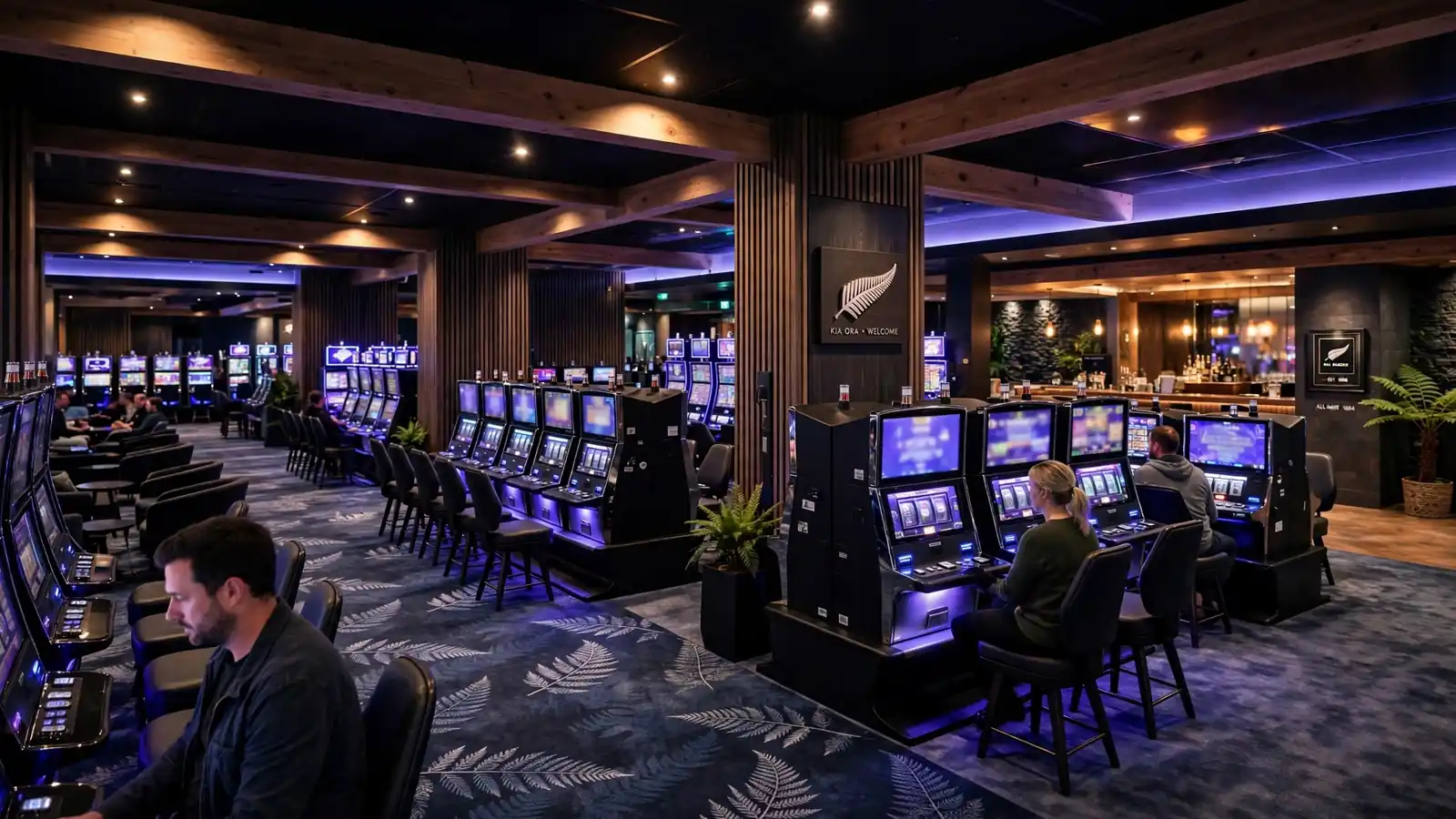
The Different Kinds of Slot Games You’ll Come Across
The first thing I notice when browsing pokies is how much the format changes the feel of a game before I’ve even understood its rules. Some look like a stripped-back reel machine; others fill the screen with feature symbols, changing layouts or a jackpot meter. They’re all casino slot machine games, but the differences aren’t just cosmetic. The format affects what you see on the reels and what kinds of features the game may include.
Classic pokies: fewer reels, simpler screens
Classic pokies are the most pared-back style. They have three reels, and the screen is often built around familiar symbols and straightforward matching combinations. You don’t need to learn a complicated feature system just to follow what’s happening: the layout tells you most of the story.
That simplicity can be a relief. I’ve sometimes picked a classic game when I wanted the rules to stay out of the way. These games typically pay smaller wins more often than high-volatility titles, so their rhythm can feel different from a game built around occasional larger payouts. That doesn’t make every classic game identical, or make a particular result predictable. It’s a broad difference in the style of play, not a promise about what your own session will look like.
Choosing a slot casino in New Zealand means weighing what is known about each operator before you decide where to play. Use these short verdicts as a starting point for your own checks.
-
BitStarz
- License
- Curaçao Gaming Authority, licence no. OGL/2024/165/0185
BitStarz lists a Curaçao Gaming Authority licence, number OGL/2024/165/0185.
-
Neospin
- License
- Tobique Gaming Commission, licence no. 0000064
Neospin lists a Tobique Gaming Commission licence, number 0000064.
-
Lamabet
- Payout speed
- 1-3 business days
Lamabet lists a payout speed of 1–3 business days, a useful detail to consider when reviewing its payment terms.
-
Ricky Casino
- License
- Tobique Gaming Commission, licence no. 0000002
Ricky Casino lists a Tobique Gaming Commission licence, number 0000002.
-
7Bit Casino
- License
- Tobique Gaming Commission, licence no. 0000091
7Bit Casino lists a Tobique Gaming Commission licence, number 0000091.
-
Play Grand
- License
- Malta Gaming Authority, licence no. MGA/B2C/370/2017
Play Grand lists a Malta Gaming Authority licence, number MGA/B2C/370/2017.
-
N1 Casino
- License
- Malta Gaming Authority, licence no. MGA/B2C/394/2017
N1 Casino lists a Malta Gaming Authority licence, number MGA/B2C/394/2017.
-
Wintino
- Payout speed
- 1-3 business days
Wintino lists a payout speed of 1–3 business days, giving you a stated timeframe to factor into your review.
-
Zotabet
- License
- 07017519840
- Payout speed
- 1-3 business days
Zotabet lists the licence/reference number 07017519840 and a payout speed of 1–3 business days.
A classic layout also makes it easier to see the relationship between the reels and the symbols. There may be fewer layers of animation and fewer feature screens to keep track of. If you like knowing what each part of the display is for, that uncluttered design has its appeal. If you’re after elaborate bonus sequences, it may feel a little plain.
Video pokies: more room for features
Video pokies typically use five reels and can add wilds, scatters and free spins. Those features give the screen more ways to change during a game. A wild symbol can take the place of other symbols in a combination; scatters can be tied to bonus features; and free spins provide a separate feature round without making each turn look exactly like the base game.
The extra reel space also gives designers more room for themes and visual effects. A video game might use animated scenes, sound cues and feature prompts to make the play feel like a small event. I’ve had moments where the screen was doing plenty, while I was still trying to work out which symbol had triggered what. The game’s information panel is worth a look before you start, especially if the feature symbols are new to you.
“Feature-packed” sounds like a clear advantage, but it really means there are more elements to understand. Wilds, scatters and free spins aren’t interchangeable, and their exact roles depend on the game. The format gives the designer room for them; it doesn’t tell you every rule in advance. Take a moment to read the paytable. Less guesswork.
Megaways: a changing reel layout
Megaways games are recognisable by their changing reel structure. The number of symbols shown on each reel can vary from spin to spin, so the layout you’re looking at isn’t fixed in the same way as a standard reel arrangement. That shifting number of symbols is the defining feature of the format.
Some Megaways titles can offer as many as 117,649 ways to win on a single spin. That figure describes the possible winning ways for a particular game, not a promise that a spin will produce a win. It’s also why these games can look busy: the reels may show a different arrangement of symbols from one turn to the next, and the number of possible combinations can be large.
I find it helps to separate the headline number from the actual layout. A high number of ways to win tells you something about how combinations can be formed; it doesn’t tell you which symbols will land, or how a specific game handles its features. Megaways is a format, not a guarantee of a particular experience. Check the game rules rather than assuming every title with the label works in precisely the same way.
Classic Pokies
Three reels with a simple layout and straightforward matching combinations, typically paying smaller wins more often.
Video Pokies
Five reels featuring wilds, scatters, and free spins, often incorporating animated scenes and sound cues.
Megaways
A changing reel structure where the number of symbols varies per spin, potentially offering up to 117,649 ways to win.
Progressive Jackpots
Games with a shared prize pool across multiple casinos that grows as players spin.
Progressive jackpots: a shared prize pool
Progressive jackpot pokies work differently from games whose appeal is mainly their reel layout. Every spin feeds into a shared pot across the casinos running that game. The display may make the growing prize the obvious focus, but the important distinction is that the pot is shared across those participating venues rather than belonging to one individual machine.
That shared structure can make a progressive title feel more dramatic than a game without a jackpot pool. Still, the jackpot feature doesn’t change what the format is: a slot game with a prize pot that receives contributions as people spin. If you’re comparing casino games and slot machines, treat the jackpot as one feature to understand, not as evidence that the game is more likely to suit you.
There isn’t one format that covers every preference. Three reels keep things simple; video pokies add familiar feature symbols; Megaways changes the number of symbols on the reels; and progressive games connect play to a shared pot. Once I stopped treating those labels as quality ratings, choosing a format became less about chasing impressive wording and more about knowing what kind of screen and features I actually wanted.
What a Spin Actually Does
When you press spin on a virtual pokie, software determines the result. It is not a set of physical reels slowing down and stopping; the movement on screen is a presentation of an outcome generated by a pseudorandom number generator, or PRNG.

That distinction took me a while to accept. The animation feels like a little mechanical event: symbols pass by, the reels settle, and you see whether anything lines up. But the visual sequence is not evidence that the game is weighing your previous spins or building towards a particular result. The software is doing the work; the reels are how that result is shown.
You still need to know what the game means by a win. A payout depends on its rules: the symbols and combinations it recognises, and the values assigned to them. Those details can differ between games, so a screen full of movement does not tell you much on its own. I learned to check the paytable rather than guess from the animation. Less glamorous. More useful.
RTP is another figure players often read too literally. It describes the share of wagers a game is designed to return across its entire lifetime. That is a long-run measure, not a promise about what will happen during your session, or a target the machine has to reach by the time you stop playing.
Put plainly, RTP cannot tell you what your next spin will do. It also cannot promise that a particular amount will come back to you after a short run of play. I used to see a high RTP figure and treat it like a personal safety net. It isn’t one.
A game’s displayed result and its RTP answer different questions. The PRNG software determines the virtual outcome of a spin; RTP describes the game’s overall return over its lifetime. Neither gives you a forecast for the next few minutes. That’s the part the screen makes easy to forget. The animation is immediate. The RTP is not.
Why a Slot Win Can Feel So Different from One Game to the Next
Two pokies can both show wins during a session and still feel nothing alike. On one, small payouts may appear often enough to keep the balance moving up and down. On another, you might see a long run of spins with little coming back, followed by a much larger payout. That difference in rhythm is volatility.
I used to judge a game by how often it seemed to give something back. A string of small wins felt reassuring, even when each one barely softened the cost of the spins around it. I’d come away thinking the game had been generous. Sometimes I had simply noticed the frequent little returns more than the overall result. Easy mistake.
Low-volatility slots tend to produce payouts more regularly, but those payouts are smaller. The session can feel busier: a win appears, the balance shifts, and then you carry on. That can be more comfortable if you dislike long stretches without a return. It does not mean each spin is profitable, or that frequent payouts will leave you ahead. A payout can be smaller than the amount spent reaching it.
High-volatility slots have a different feel. Quiet stretches can last longer, while the larger payouts are less frequent. If you sit through those gaps, it can seem as though nothing is happening—until a bigger result changes the mood of the session. But that possibility is not a timetable. A larger payout is not promised after a particular number of losing spins, and a quiet run does not tell you what the next spin will do.
That gap between possibility and expectation is where I’ve made poor calls. I’d pick a high-volatility game because the bigger win sounded exciting, then get impatient when the session was mostly uneventful. Or I’d choose a game with frequent small payouts and mistake activity for progress. Neither reaction changed the game’s pattern; it only changed how I felt while spending.
The word “volatile” can sound like a technical label you can ignore. In practice, it describes the kind of ride you may get: more frequent, smaller returns at one end; longer quiet stretches and larger payouts at the other. It does not tell you what will happen during your particular session, and it is not a measure of how likely you are to finish ahead.
So when casino slot machine wins seem to vary wildly from one game to another, the size and spacing of payouts can be part of the reason. A game that feels lively is not necessarily kinder to your balance. A game that feels quiet is not necessarily about to reward your patience. The rhythm is a description, not a signal.
I now try to match that rhythm to what I can tolerate, rather than choosing a game because its biggest possible win catches my eye. If frequent small payouts would keep me playing longer than I intended, that pattern has its own downside. If long quiet spells would tempt me to chase a win, a high-volatility game is probably a poor fit for that mood. Before playing, decide on a maximum loss you can accept and stop when you reach it. No slot owes you a better ending.
Do
- Match the game's volatility to your own risk tolerance
- Decide on a maximum loss limit before playing
- Stop playing once your pre-set limit is reached
Don't
- Choose a game solely based on the biggest possible win
- Chase a win during long quiet spells in high-volatility games
- Mistake frequent small payouts for overall progress
That’s the useful distinction: volatility helps explain why two games can feel so different, but it cannot make either one predictable. A steady stream of small wins and a stretch of silence followed by a larger payout are different experiences—not evidence that one game is secretly ready to pay.
Slot Machine Secrets That Aren’t Really Secrets
A payout percentage can look like the answer you’ve been hunting for. I used to see a bigger figure and think, “There’s the better machine.” What it really tells you is narrower: a casino is claiming that a game has a particular payback rate. It does not tell you what will happen in your session, or when a payout might arrive.
Some online casinos publish payout percentage audits on their websites, sometimes alongside claims that their games return more. That disclosure is worth noticing, but it isn’t a personal forecast. An audit may offer information about the figures being reported; it cannot promise that your own results will match them. The gap between those ideas is where a lot of advertising gets its shine.

I’d look for the audit itself rather than stopping at a banner or a line saying “high payout”. Is there a report to read? Does it clearly identify what was checked? Can you tell which games or figures it covers? If the page gives you a number but little context, treat the claim as a claim, not proof that your next session will go well.
There’s no hidden setting you can uncover by comparing promotional wording. A higher advertised payback percentage does not mean a game is about to pay, and a published audit does not turn uncertainty into certainty. It may help you understand what an operator chooses to disclose. That’s useful, but it has limits.
I’ve made the mistake of treating a confident number as if it were a private tip. It wasn’t. The sensible move is to separate what the site says from what you can actually know about your own outcome. Then set a maximum loss limit before you start, and stick to it; a payout claim is no reason to raise it or chase a bad run.
So, when you see talk of casino slot machine secrets, look past the mystery language. A disclosed figure and an audit can offer something to inspect, not a shortcut to winning. If the detail is thin, don’t fill in the blanks with optimism. Read the claim plainly, decide whether it gives you enough information, and remember that no advertised percentage can settle how a session will end.
No magic switch.
A Slot Strategy That Starts Before You Spin
I used to treat a welcome bonus as extra money. Then I found out the balance could look generous while the rules made it awkward to use. The useful part of a casino slot machine strategy often happens before the first spin: read the offer as a set of conditions, not a gift.
Start with the wagering requirement. Specialist reviews report welcome-bonus requirements ranging from 30x to 50x, but the exact calculation depends on the offer’s terms. Check what the multiplier applies to, and whether the bonus balance, the deposit, or both are included. Don’t assume a large-looking bonus is easy to clear. The number that matters is the amount of wagering the rules actually require.

Next, look for a maximum bet while the bonus is active. Specialist reviews describe caps of NZ$5 per spin, though the terms can differ between offers. A bet above the stated cap may put bonus eligibility or resulting winnings at risk. I’d rather know that before spinning than discover it when I try to withdraw.
Expiry matters too. Specialist reviews report bonus funds expiring between 7 and 30 days, depending on the site. Find out when the clock starts and what happens to unused funds when time runs out. A short window can turn an offer into pressure to play more than you planned. That’s not a strategy.
Then check which games count toward wagering. Some slots may be excluded or contribute less than others, so don’t assume every pokies title moves the requirement along at the same rate. Look for the eligible-game list and the contribution rules in the promotion’s terms. If that detail is hard to find, pause rather than guessing.
Before accepting, read the withdrawal conditions and any identity-verification requirements as well. A bonus can affect when you can withdraw, and completing verification may be part of the process. The point is to know what you’re agreeing to, not to chase a balance that comes with strings.
I also set a maximum loss limit before I start, and I don’t raise it to recover a bad run. If the offer’s wagering, bet cap, expiry, or eligible games don’t fit the time and money I’m prepared to spend, I leave it alone. Less exciting. Much clearer.
Which Slot Formats Are Popular—and What Sets Them Apart
Popularity is hard to pin down without reliable play data, so I wouldn’t treat a familiar format as proof that it is played more than others. What you can compare is how each one handles a spin and what it asks of you.

Megaways games change the number of symbols shown on each reel from one spin to the next. That shifting layout affects how many combinations can form; some titles can offer as many as 117,649 ways to win on a spin. The big number can look like a promise, but it describes possible winning combinations, not a prediction that any particular spin will pay.
Bonus-buy games take a different approach. Instead of waiting for the base game to trigger its bonus round, the feature lets you pay a set multiple of your stake to enter directly. A specialist slot review reports costs ranging from 50 to 100 times the stake, depending on the game. That is a source-specific description, not a price rule for every title; check the game’s own information before you play. And remember, buying access to a feature does not guarantee a return.
That shortcut is easy to misread. I used to focus on the bonus screen and ignore what reaching it actually cost. Bad trade. A direct entry can make the feature easier to access, but it also puts a substantial cost upfront, so decide on a loss limit before opening the game and stop when you reach it.
Other formats stand apart through their screen structure and features. Classic pokies use three reels and are generally associated with smaller wins arriving more often than in high-volatility games. Video pokies commonly have five reels, with features such as wilds, scatters and free spins. Progressive jackpot games add another distinction: spins contribute to a shared pot across casinos running that game. These are different mechanics, not evidence that one format is more likely to suit your budget.
Demo mode can be useful when you want to learn where a feature appears or how the controls work. It won’t show a progressive jackpot paying out, though: those jackpots are not awarded in demo play. Treat practice as a way to understand the layout, not as a preview of what real-money play will deliver.
Before playing, check the applicable age requirement and set a firm spending limit. If the attraction is a huge ways-to-win figure or a bonus you can buy into, pause and look at the actual stake involved. The format can change the experience; it cannot make the cost disappear.
Real-Money Slots in New Zealand: What the 2026 Shift Means
When people talk about real-money pokies online, they may mean games opened in a browser or games played through a downloaded client. With browser-based play, the casino games run without you installing software on your computer. A download-based service requires a software client before you can play and wager. That difference affects how you access the games; it does not tell you whether a service has New Zealand authorisation.

The legal picture has changed during 2026. A specialist market briefing describes New Zealand as moving towards domestic licensing, but the transition has defined dates: the Online Casino Gambling Act 2026 took effect on 1 May 2026, creating the country’s first local licensing framework for online casino gambling. The Department of Internal Affairs is responsible for the framework.
That did not mean a fully licensed market appeared overnight. Providers that were already serving people in New Zealand before the Act took effect can continue during the transition, until 1 December 2026. The complete licensing regime is not expected to be operational until 2027. So “licensed” needs context: during this period, an operator’s ability to continue under transitional provisions is not the same thing as the fully operational future regime.
Before the new Act, online casino services supplied from outside New Zealand were not licensed or supervised by a New Zealand regulator. Customers using offshore sites had no domestic government recourse. The Gambling Act 2003 prohibits online casinos from being based in New Zealand; it targets operators running them here, rather than players. That distinction matters, but it does not turn an offshore site into a locally regulated one.
I used to treat a game loading quickly as a sign that the whole service was straightforward. It only told me the game had opened. The access method and the legal status are separate checks, and neither is proof of the other.
If you are comparing browser play with a download, think about the software you are being asked to install and whether you want a client on your device. For the legal side, look at whether the operator is permitted to serve customers under the rules applying at that point in the transition. New Zealand’s regime is still being phased in. A logo or a familiar-looking game screen cannot settle that question by itself.
Can You Trick a Slot Machine? Not the Randomness
I’ve caught myself staring at a run of losing spins and thinking the machine must be building towards something. That thought feels persuasive when you’re watching the screen, but it doesn’t give you a way to predict what comes next. Each spin is independent. A slot doesn’t remember the last result, and it isn’t “due” to pay because you’ve waited or lost for a while.
That’s the part that makes supposed tricks so tempting. People look for patterns in near-misses, repeated symbols, or a stretch of small payouts, then treat those observations as clues. But a pattern you notice after the fact isn’t a forecast. It can explain what you’ve just seen; it can’t tell you what the next spin will show.
The same goes for changing your routine. Pausing between spins, pressing the button in a particular way, switching machines, or playing at a certain time may make the experience feel more controlled. I’ve leaned on little rituals like that myself. They can change how you feel while playing, not make the next result obey you.
There’s no secret timing to learn, either. If a game has been quiet, that doesn’t mean it owes you a win. If it has just paid, that doesn’t mean another result is ruled out. Each new spin stands on its own, rather than taking instructions from the history you can see on screen.
So can you trick casino slot machines? Not by reading a streak or finding a rhythm. The problem isn’t that you haven’t spotted the right signal; it’s that past outcomes don’t provide a reliable signal for the next one. A convincing theory can still be just a story built around random results.
I find it helps to notice when I’m trying to turn a run of outcomes into a plan. That’s often the moment I start giving the machine more meaning than it has. You can choose whether to keep playing, but you can’t make a previous spin count as evidence that the next one will go your way.
No hidden code. Just a new spin.
There’s No Such Thing as a Guaranteed Winning Slot
I used to look for a “winning” pokie as if the right choice could turn a gamble into a plan. It sounds reassuring: find the machine that pays, sit down, and wait for the good result. But “winning” can mean several different things, and none makes a future payout certain.
A pokie might pay during a session. You might even finish that session ahead. That describes what happened, not what the game will do next time. Calling a game a winner can blur that distinction, especially when a few memorable payouts stick in your mind more strongly than the spins that went nowhere.
Volatility tells you something about the *pattern* of payouts, not whether a game is a safe bet. Low-volatility pokies tend to return smaller amounts more regularly. High-volatility ones can have longer quiet stretches, with larger payouts when they land. That difference may shape how a session feels, but it cannot promise that a particular spin—or your next session—will pay.
I learned that the hard way by treating “frequent wins” as if it meant frequent progress. A small payout can feel like a win while still leaving you down overall. And a game associated with larger payouts can take your balance through a long dry spell without ever delivering one. The label tells you about a tendency in the payout pattern; it is not a forecast for your wallet.
So what should “winning slot” mean when you’re choosing a game? At most, it can describe the kind of experience you prefer: smaller, more regular payouts, or the possibility of less frequent, larger ones. It cannot identify a machine that will reliably return your stake, produce a profit, or rescue a losing session. No label changes that.
Before I play, I set a maximum loss I can accept and stop when I reach it. That limit is about keeping the session contained, not making the game pay. If I find myself raising it because a win feels close, I take that as a sign to step away—not as evidence that the machine is about to turn around.
A “winning” pokie is only winning in hindsight, after a payout has happened. Choosing one may shape the rhythm of play, but it cannot settle the result in advance. Better to go in knowing what a game’s payout pattern suggests—and what it does not. No sure thing.
Casino Slots: Games, Machines, and the Terms That Matter
A “casino slot machine” can mean the physical cabinet on a casino floor, but people also use the phrase for the digital game on its screen. Online, there may be no machine in the room at all: you are choosing a slot game through a website or app. In New Zealand, these games are commonly called pokies. The wording changes; the basic idea is that you select a game and place a stake to play.
That distinction is useful when you are comparing options. The machine is the equipment or interface; the game is the set of rules, symbols, features and payment conditions you encounter. A physical cabinet and an online version may look similar, but the phrase “slot machine” alone tells you little about how a particular game works. It is worth opening the game information rather than assuming that a familiar-looking screen means familiar terms.
I’ve been caught out by broad labels before. “Pokies” sounds like one simple category, but it can refer to games with quite different features and conditions. If you are looking at a casino slot game online, the practical questions are less about the label and more about what the game lets you do, whether you are playing in demo mode or for real money, and what rules apply to any bonus attached to your account.
Demo play is not the same as a cash session
A demo mode can be useful for getting a feel for a game’s controls and features without wagering real money. It lets you see how the game behaves on screen, but it should not be mistaken for a way to test whether you will make a profit. A demo session does not establish what will happen in a later real-money session.

There is also an important exception if you are looking at a progressive jackpot game: its jackpot does not pay out in demo mode. So a demo can show you something about the game’s mechanics, but not provide access to that prize. That difference is easy to miss when the demo screen looks much like the paid version.
The bonus is a separate set of terms
The part I would slow down for is the bonus wording. A casino bonus may come with a wagering requirement: you have to place a specified amount of bets before you can withdraw. Until that condition is met, a displayed bonus balance does not necessarily mean you can take that money out. A bonus can also affect whether a withdrawal is available at all, so the headline offer is only one part of the deal.
The details are not interchangeable between offers. Check what amount the wagering condition applies to, which games contribute towards it, and whether there are restrictions on withdrawing while the condition remains unfinished. If the offer rules are unclear, it is safer to treat the bonus as money with conditions attached, not as cash already available to you.
One point that can make a difference is game contribution. A specialist review describes slots as counting fully towards wagering requirements in some offers, while noting that particular titles can be excluded or contribute less. That is not a rule you should assume applies everywhere: the terms for the offer you are considering are what matter. A game that appears eligible may still contribute differently from another, and an excluded title may not help satisfy the requirement at all.
I once paid more attention to the size of an offer than to the conditions underneath it. That was the wrong order. If a bonus comes with a wagering condition, the useful question is not simply “How much is offered?” but “What will count, and what has to happen before I can withdraw?” Read those points before opting in, and set a maximum loss limit before you start playing. Don’t raise your stake to chase a loss or to rush through a requirement.
Keep the terms in view
When you see references to a slot machine casino, think of that as a broad description, not a promise that every game, bonus or withdrawal follows the same rules. The game information explains what you are playing; the offer terms explain what applies to the bonus. They are related, but they answer different questions.
A quick check before starting can prevent a bad surprise: identify whether you are in demo mode or wagering real money, look for any progressive jackpot conditions, and read the bonus rules if you have accepted an offer. In particular, confirm which games count and whether the wagering condition must be completed before a withdrawal. Those details are less exciting than the game screen. They matter more when you want to understand what your balance actually represents.
No clever wording can turn a conditional bonus into an unconditional withdrawal. I find it helps to read the rules as part of the game, not as paperwork that can wait until later. That small pause can save you from discovering, after a session, that the offer worked differently from what you assumed. The screen is only half the story.
Slots & Software for New Zealand Online Casinos
Content created by the «casinoslotnz.com» team