
Check the operator before you trust the table
 Available in US
A practical look at operator checks, live table formats, video feeds and roulette’s house edge.

How to Judge a Live Roulette Site Without Chasing a “Best” Label
“Best” is a sales word, not a test. I used to treat a polished page and a confident claim as evidence that I’d found a decent place to play. They aren’t. For a live roulette site, I’d start with a more basic question: can I tell who operates it, who regulates it, and how I can check those claims?
That matters in New Zealand because there is no Kiwi-specific gambling licence. Offshore sites are accessible to Kiwi players, but access alone does not tell you whether an operator is properly regulated. Before depositing, look for the company behind the site and the gambling authority it says oversees it. If the operator’s identity or regulatory details are hard to find, that is a reason to pause rather than fill in the blanks yourself.
Check the licence claim, not just the badge
A regulator’s logo in a footer is easy to display. What matters is whether the operator’s licence status can be confirmed. First, note the operator’s full legal name and the authority it names. Then check the operator’s status with the Department of Internal Affairs (DIA), as players are advised to do. If you still cannot establish who holds the licence or what it covers, don’t treat a badge or a line of marketing as proof.
You can also check with the gambling body the site identifies. Use that body’s own information where available, rather than relying only on the casino’s description of its credentials. The point is not to collect impressive-looking seals. It is to establish that the offshore operator is regulated by a recognised gambling body and that the licence claim relates to that operator.
A licence should not be mistaken for a promise that nothing can go wrong. It is a basic screening check, not a guarantee about every part of your experience. I learned to separate those ideas the expensive way. A reassuring design is not a regulator.

Read the terms before money is involved
Before playing, find the site’s terms and make sure they are readable and relevant to you. Pay attention to whether they explain who provides the service, what rules apply to your account, and how the operator handles issues. If important conditions are scattered, vague, or difficult to locate, you are being asked to accept uncertainty before you have even started.
This is not about hunting for a clever trick. It is about noticing whether the operator gives you enough information to make a considered choice. If something is unclear, ask the operator for an explanation and keep its answer. If the answer avoids the question, that tells you something too.
Also check the site’s own rules for the live roulette table you intend to use. Don’t assume that a label or a promotional description tells the whole story. Read the information attached to the game and make sure it matches what you think you are choosing. If it does not, step back. You do not need to resolve every uncertainty by wagering.
Separate a game label from a quality claim
Terms such as “exclusive” or “premium” can make a table sound special without showing what that means in practice. I now read those words as decoration until there is a clear explanation behind them. The same goes for claims about unusual formats: a title alone is not enough to establish what rules a table follows or whether it is available to you.
Be careful with pages that promise a shortcut or a “trick” for live roulette. A site’s marketing can make a routine feature sound like an edge. That does not make it one. For screening purposes, stick to what you can verify: the operator’s identity, its regulatory status, and the terms that apply to the game and your account.
- Confirm the operator's full legal name and regulatory authority
- Check the operator's status with the Department of Internal Affairs (DIA)
- Read the terms and conditions for readability and relevance
- Review the specific rules for the live roulette table you intend to use
A live roulette site does not become trustworthy because it uses familiar language or looks busy. Nor does a cautious-looking disclaimer settle every question. I look for information I can check, not a mood the page is trying to create.
Decide before you deposit
Give yourself a simple stopping rule: if you cannot confirm who runs the site, identify the regulator it names, or understand the conditions you are accepting, do not deposit yet. Confirm the licence status with the DIA, and make sure the offshore operator is regulated by a recognised gambling body. These checks do not turn a site into a risk-free choice; they help you avoid relying on appearance alone.
I used to click first and investigate later. That order made it harder to think clearly, especially once money was involved. Now I do the dull checks while I still have nothing at stake. Dull is good. A “best live roulette” label can wait; a verifiable operator cannot.
What New Zealand’s 2026 Rules Mean for Live Roulette
Choosing a live roulette site in New Zealand calls for checking what is actually known about each option. Use these brief notes as a starting point while considering which details matter to you.
-
BitStarz
- License
- Curaçao Gaming Authority, licence no. OGL/2024/165/0185
BitStarz lists a Curaçao Gaming Authority licence, no. OGL/2024/165/0185.
-
Neospin
- License
- Tobique Gaming Commission, licence no. 0000064
Neospin lists a Tobique Gaming Commission licence, no. 0000064.
-
Lamabet
- Payout speed
- 1-3 business days
Lamabet’s listed payout speed is 1–3 business days. That is the available detail to consider when assessing it for your live roulette options.
-
Ricky Casino
- License
- Tobique Gaming Commission, licence no. 0000002
Ricky Casino lists a Tobique Gaming Commission licence, no. 0000002.
-
7Bit Casino
- License
- Tobique Gaming Commission, licence no. 0000091
7Bit Casino lists a Tobique Gaming Commission licence, no. 0000091.
-
Play Grand
- License
- Malta Gaming Authority, licence no. MGA/B2C/370/2017
Play Grand lists a Malta Gaming Authority licence, no. MGA/B2C/370/2017.
-
N1 Casino
- License
- Malta Gaming Authority, licence no. MGA/B2C/394/2017
N1 Casino lists a Malta Gaming Authority licence, no. MGA/B2C/394/2017.
-
Wintino
- Payout speed
- 1-3 business days
Wintino’s listed payout speed is 1–3 business days. This is the available detail to weigh when considering it for live roulette.
-
Zotabet
- License
- 07017519840
- Payout speed
- 1-3 business days
Zotabet lists licence reference 07017519840 and a payout speed of 1–3 business days.
For Kiwi players, the legal picture changes during 2026 rather than flipping from “allowed” to “forbidden” overnight. The Online Casino Gambling Act 2026 took effect on 1 May, creating New Zealand’s first domestic licensing regime for online casino gambling. Live dealer tables, including roulette, sit within the same broad online casino framework as other digital casino games.
That date matters, but it does not mean every offshore table suddenly became a locally licensed service. Before the Act, New Zealand had no domestic licensing system for online casinos. The Gambling Act 2003 did not permit online casinos to be based here, while players could still access gambling sites operating offshore. Those services were not licensed or supervised by a New Zealand regulator. The new law changes the framework for providers; it does not mean that an individual player’s access to an international live roulette table instantly disappears.
I used to read a new gambling law as if it were a switch: one day the old rules, the next day a completely different market. Here, the transition is more gradual. The Act sets out a period from 1 May to 1 December 2026, during which providers already serving people in New Zealand before the start date may continue operating under the transitional provisions.

What changes on 1 December
The key date for access is 1 December 2026. From then, only approved operators—up to 15 under the new regime—may legally accept Kiwi players. That is the point at which the transitional arrangement ends for providers that have not secured the necessary status under the new system.
So, if you are looking at a live roulette table during the transition, the date and the operator’s position both matter. A site continuing to operate in the middle of the year is not automatically evidence that it will be permitted to accept New Zealand players after the transition closes. The permission to continue during the interim period is tied to having already provided services before 1 May; it is not a permanent exemption from the new rules.
There is another detail that is easy to miss: New Zealand does not issue a separate Kiwi-specific gambling licence. The relevant change is the introduction of a domestic licensing regime for online casino providers, rather than a new local licence for each game. Live roulette is covered because it is an online casino table, not because roulette has a separate legal category.
What this means for a live table
In practical terms, the reform is about which providers may serve the market, not about roulette itself. A live dealer table does not become a different game on 1 December. What changes is the legal position of the operator offering it to people in New Zealand.
That distinction is useful when a site presents uninterrupted access as proof that nothing has changed. Availability at a particular moment and permission to operate under the new regime are separate questions. The Act sets a limit on the number of licences, and the transition gives existing providers time to move into the new system. It does not promise that every service currently reachable will remain available to Kiwi players.
The full licensed online casino regime is not expected to be fully operational until 2027, so the transition and the longer-term system should not be confused. The December date marks a significant cutoff for who may legally accept New Zealand players under the new regulations; it does not mean every part of the licensing system will be fully settled on that same day.
One thing I would not do is read “offshore” as an automatic answer either way. Before the new framework, players were not prohibited from accessing offshore platforms, and Kiwis remain free to play live dealer games at international sites. But the market’s rules for providers are changing. Access to a roulette table and the operator’s legal standing are not the same thing.
For live roulette in New Zealand in 2026, the simplest timeline is: the Act began on 1 May; qualifying existing providers could continue during the transition; and from 1 December, only approved operators may legally accept Kiwi players. The transition is real. So is the cutoff.
Playing Live Roulette Online: The Dealer, the Wheel and the Stream
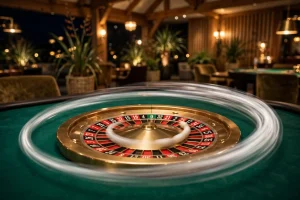
Live roulette online is not simply a digital wheel with a voice added over the top. The live-dealer format uses a real roulette wheel, operated by a professional dealer in a studio or casino setting, with the table shown through live video. You join the game remotely and interact with the dealer while the round is taking place.
That distinction changed how I thought about it. I had assumed “live” might mean a polished animation dressed up to look like a table. It means the wheel and dealer are real; the video connects their table to your screen. The software is still part of the experience, but it is not generating a virtual spin in place of the physical wheel.
A table, not just a screen
When you enter a live casino roulette table online, you see the dealer and the equipment in the studio. The dealer presents the game, and the physical wheel is at the centre of what happens. You are not sitting in the room, but you are watching the table as the game unfolds rather than seeing a computer-made version of it.
The exact look of a table can vary. What matters is the basic setup: a professional dealer, a real wheel and a live video connection. I found it easier to follow once I stopped expecting the screen to behave like a standard online game. There is a person on the other side of the feed, and the play is happening around that person.
That is the core of the format. No mystery.
Taking part from a distance
The video feed lets players interact with professional dealers while playing. That does not mean you are having a private conversation or controlling the wheel; it means participation happens through the live table’s interface while the dealer runs the game. The table brings the physical game and its remote players into the same round.
For me, that makes live roulette feel different from playing against a purely digital display. You can watch the dealer and wheel, rather than relying only on an animation or a result appearing on screen. It is still online play, with all the distance that implies, but the physical table gives the game a human presence.
I would not mistake that presence for a guarantee about how a particular table works behind the scenes. A live broadcast shows the dealer and wheel; it does not, by itself, tell you every rule or feature attached to that table. Read the table information before joining, rather than assuming every live roulette game is identical.
What “live” does—and doesn’t—mean
The word can sound like a promise of a special experience. In practice, it describes the format: a real game is broadcast, and players can take part as it happens. It does not mean you are at the casino, and it does not turn roulette into a conversation with the dealer. The interaction sits within the game.
If you are used to digital roulette, the shift is simple but noticeable: instead of watching a simulated table, you watch a dealer operate a real wheel through a live feed. If you are new to roulette, the screen may feel busy at first, because the dealer, table and game interface are all present together. Give yourself a moment to take in what is on screen before you decide whether the format suits you.

That is the appeal for me—not a claim that live play is better, just that it feels more connected to an actual table. You see a person dealing and a real wheel turning, while taking part from wherever you are. It remains a remote game. The table is real; your seat is not.
Double-Ball Roulette: What the Live Format Does—and Doesn’t—Tell You
The phrase “double-ball roulette” sounds like a clear description of a game. It isn’t enough, on its own, to tell you what a particular table offers. It may catch your eye while browsing, but the name alone does not confirm the rules, how a round works, or what happens to a bet. I’d treat it as a label to investigate, not a promise about the experience.
The “live” part describes a different thing. Live dealer games are broadcast from a studio or a casino in a particular country, so players can take part in real time with actual dealers. That tells you something about how the game reaches your screen. It doesn’t establish the rules of every roulette variation presented in a live setting.
That distinction is easy to miss. I’ve caught myself assuming that a catchy game name explained the whole setup. It usually explains less than you’d think. With double-ball roulette, don’t infer the ball count, wheel procedure, betting options, or payout conditions from the title alone. Those details need to be stated in the rules for the specific table.
If you find a table described as live double-ball roulette, look for its own explanation before joining. Check whether it clearly sets out how the round is conducted and how each possible result affects bets. If the description is vague, or the rules don’t match the name you saw, pause rather than filling in the gaps yourself. A familiar roulette layout does not guarantee that a variant follows the rules you already know.
There’s also a difference between seeing a live dealer and understanding the game. A real dealer and a live broadcast can make a table feel straightforward: you’re watching events unfold as they happen. But the broadcast does not, by itself, explain a special variant’s mechanics. If you cannot tell what the table’s name means for the round, watching the dealer won’t resolve that uncertainty.
I’d keep the questions simple: What exactly happens during a round? Which outcomes are covered by the table rules? How are bets settled? The answers should come from the table’s own rules, not from assumptions based on another roulette game or on the word “double.” If you can’t find clear answers, there’s no need to treat the label as sufficient.

This is especially useful when moving between ordinary roulette and a named variation. Similar-looking screens can create a false sense of familiarity. You may recognise the wheel and betting area while overlooking a rule that changes how the game works. Take a moment to read the particular table’s instructions, even if you’ve played roulette online before.
So, a live table tells you that play is being broadcast in real time with a dealer. “Double-ball” is a separate claim about the variant, and the name alone doesn’t spell out its rules. Keep those two ideas apart. Check the table’s explanation, and don’t assume a title is a rulebook.
No guesswork needed.
Why the Video Feed Matters at a Live Roulette Table
The video is not just decoration around a betting screen. At a live roulette table, it is the link between you and the professional dealer: you watch the action as it happens and can interact with the dealer while the game is being run. That gives the experience a human presence that a screen showing only software-generated results cannot provide.
I used to treat the picture as something to glance at and then ignore. That missed the point. A live feed lets you follow the table in real time, rather than seeing only a result after the fact. You can pay attention to the dealer’s handling of the round and feel connected to the activity as it unfolds. It does not put you in control of the wheel, of course. It puts you in the room, at a distance.
The role of the video feed
The live stream serves as a window to the table, allowing you to follow the dealer's handling of the round in real time. While it adds a human presence, it does not grant control over the wheel or change the game's underlying rules.
That distinction matters. The video does not turn roulette into a conversation with a dealer on demand, nor does it make the dealer responsible for what you choose to bet. Interaction is part of the live format, but the game still runs according to its own pace and rules. I find it helps to think of the stream as a window onto the table, not a personal service.
When you are choosing whether to play, notice whether the feed helps you follow what is happening. A clear, steady view can make the table feel easier to read as an experience; a picture that is hard to follow can make the same game feel detached. That is about your comfort with the stream, not evidence that one result is more likely than another. A convincing-looking broadcast is still not a reason to trust a site blindly or to assume that every detail is transparent.
There is also a small difference between watching passively and taking part. With a live dealer, you are not simply viewing a recording: the game is broadcast live, and the dealer is there in real time. You can engage with that setting while deciding how you want to play. I like having that visible human element, but I do not mistake it for a guarantee of a better experience. The feed can make a table feel more immediate; it cannot remove the ordinary uncertainty of roulette.
For Kiwi players looking at live roulette in New Zealand, the useful question is not whether the stream looks polished in a promotional image. It is whether the actual video lets you follow the dealer and participate without feeling lost. “Immersive” is a sales word; the practical value is simpler: you can see the live table and interact with its professional dealer.

I have learned to separate atmosphere from substance. A live picture can make a round feel more present, and that may be exactly what you want from video roulette. But the screen is a way to connect with the table, not a promise about results. Keep that straight. It helps.
Roulette Strategy: Keep the House Edge in View
I used to think a live roulette strategy meant finding a pattern the table had somehow missed. A run of red, a cluster of numbers, a wheel that looked “due” — I could turn any of them into a reason to keep betting. It felt like analysis. Mostly, it was me trying to make a random result feel negotiable.
The house edge is a better starting point. In live European roulette, it is usually around 2.7%; in American roulette, it is usually around 5.26%. Those figures describe the casino’s mathematical advantage over time, not a prediction of what will happen in your next session. A player can win in the short term, of course. That does not mean a system has changed the underlying odds.
That distinction matters when you’re weighing a live online roulette strategy. A staking pattern can change how quickly your balance rises or falls, and it can make play feel more structured. It cannot make a losing bet favourable just because you increase it after a loss, switch colours, or wait for a particular number of spins. I have tried to impose that kind of order on a table. The wheel did not care.
Do
- Decide on a loss limit before starting
- Keep the session within your set boundary
- Accept the house edge as a mathematical fact
Don't
- Chase losses to win back money
- Rely on betting patterns or "due" numbers
- Treat a staking system as a way to remove the house edge
A useful strategy is less dramatic: decide what you’re willing to lose before you start, and don’t treat that amount as a target you need to win back. Keep the session within that boundary. If you notice yourself changing the plan because the last few results have annoyed you, that is a good moment to step away. No clever sequence is worth turning a game into an argument with your own judgement.
The same goes for a promise of an “instant” route to a win. In roulette, instant usually means quick access or a fast result, not a shortcut around the house edge. A live dealer and a visible wheel can make each decision feel more personal than a number on a screen, but the feeling of involvement is not an advantage in the maths.
I try to judge a strategy by what it can genuinely do. It may help you set limits, choose how you want to bet, and avoid chasing losses. It cannot guarantee a profit or remove the casino’s edge. That is the boring part. It is also the part I wish I had taken seriously sooner.
Free Live Roulette and Bonus Offers: Check the Fine Print
I used to read “free” as meaning I could sit down at a live table and play without putting anything at risk. That is not a safe assumption. Live dealer games are typically not offered for free play: running a staffed table and its studio operation costs the casino money. So a free live roulette online game may not be available in the same way a demo version of a digital game can be.
That does not mean every offer mentioning roulette gives you a free seat at a live table. A promotion can have conditions about which games qualify, how the credit can be used, or whether live dealer games are excluded. Read the terms for the specific offer before treating its headline as usable funds. “Free” can mean restricted.
What a bonus actually lets you play
A free bet and free spins are not interchangeable. If an offer talks about a free bet, check whether it applies to live roulette or only to named games or categories. If it advertises ten free spins, that wording alone does not show that the benefit can be used on roulette at all. Spins belong to spin-based games; do not assume they convert into roulette bets.
I have made that mistake in reverse: I saw a generous-sounding offer and started planning around it before checking what it covered. The terms were the part that mattered. Read them first.
Also check whether a bonus is cash, a restricted credit, or something that can only be used under stated conditions. The label does not tell you how or where it can be played. If the offer does not clearly say that live roulette is eligible, do not count on using it there. A customer support reply may clarify the wording, but keep a copy of the terms you relied on.
When “free” means watching, not wagering
A table may let you view a live game without giving you free bets to place. Watching a feed and taking part with a wager are different things. If your aim is to learn the rhythm before risking money, look for a clearly labelled practice option and confirm that it is actually available for that live table. Do not infer one from the word “live” or from a general casino promotion.
I would treat a no-deposit claim with the same caution as any other headline: verify the eligible games and conditions rather than assuming it covers live roulette. If the terms are vague, that is not a reason to fill in the blanks in your favour.
No free table guaranteed.
Auto Live Roulette and the Risk of a Connection Glitch
“Auto” sounds like a clear feature label, but I wouldn’t assume it describes a separate kind of live roulette. It could suggest automation to a player, yet the label alone does not tell you what is automated, how the table works or whether any particular rules apply. I’d check the table’s own description rather than filling in the gaps from the name.
That distinction matters if you’re comparing live roulette with a fully automated game. A live dealer table involves a real dealer and wheel, but “auto” on a menu does not, by itself, confirm that the dealer or wheel has been replaced by software. Nor does it prove there is an automatic betting feature. The wording may be vague. Don’t build an expectation around one word.
Connection trouble is another reason to keep expectations modest. A specialist review has reported that live dealer games can run into technical problems, though that does not establish how often they happen at any particular table. A glitch might leave you unsure whether the screen is current or whether the round has reached its outcome. That’s frustrating. I’ve learned not to treat a frozen picture as a result.
If something stops responding, don’t rush to place another bet or assume the first one failed. Give the table a moment, then look for a clear status or result in the game interface. If the situation remains unclear, use the operator’s support channel before making another move. Keep any relevant account or round details available; they may help support understand what happened.
I’d also avoid reading “auto live roulette” as a promise of smoother play. Automation, if a particular table offers it, would need to be described by that table; the label is not enough to verify it. A live game can still depend on a working connection, and no wording on a menu can prevent a technical interruption.
My rule is simple: treat the label as a clue, not a specification. Check what the table actually says, and if a connection glitch leaves the round unclear, wait for confirmation rather than guessing. No guesswork.
How to Follow a Live Roulette Round
A live round moves through a simple cycle: betting opens, you make your selections, betting closes, and the dealer completes the spin. Then the result is settled and the next round begins. Once you know that rhythm, it is easier to follow what is happening without trying to make a decision at the last moment.
Following a Round
-
1
Place Bets
Use the on-screen layout to select your numbers while the betting area is open.
-
2
Confirm Selection
Check that your chips are on the correct spaces before the countdown ends.
-
3
Observe the Spin
Watch the dealer and wheel after betting closes to see the result.
-
4
Settle and Repeat
Wait for the table to settle bets and clear the layout before the next round begins.
When the betting area is open, use the on-screen layout to place your chips on the numbers or other choices you want to cover. Check the table display before confirming: a chip can land on a neighbouring space if you tap or click in a hurry. I have done that, then spent the round watching a bet I never meant to make. Slow down for one second.
The important cue is the betting countdown or closing signal. Most live games give you only a limited window to place a bet, so the pace is quicker than a casual glance at the table might suggest. If you are still deciding when betting closes, that round is gone; you cannot add a selection once the betting period has ended. Make your choices while the layout is open, and leave a moment to check them.
After the window closes, watch the dealer and wheel rather than looking for a way to change your bet. The round has moved on. When the winning result appears, the table settles the bets, clears the layout for the next turn and opens betting again. You can then decide whether to play another round or stop.
If you are new to live roulette, keep your first few rounds simple: follow the open-and-close cues and make sure you understand what you selected before the wheel is spun. You do not need to keep pace with every other player. A missed round costs nothing to observe, and watching one can make the sequence clearer.
The key is not to rush just because the table does. Read the layout, act while betting is open, then let the round finish. No scramble needed.
European and American Live Roulette: The Difference in the House Edge
When I compare live roulette games, I start with one plain distinction: the usual house edge is lower on the European wheel than on the American one. That does not make either format a reliable way to come out ahead, but it does affect how much of each wager the game is designed to retain over time.
For live European roulette, the house edge is usually around 2.7%. For live American roulette, it is usually around 5.26%. Those figures are the useful comparison here. The American format’s usual edge is nearly twice the European figure, so treating the two as interchangeable would miss a meaningful difference.

“Same game” sounds close enough until you check the numbers. I used to pay more attention to the live table label than to the format behind it. That was backwards: a dealer and a video feed tell you how the game is presented, not which of these two house-edge figures applies.
The percentages describe the house’s mathematical advantage, not what must happen in a particular session. A short run can go either way; the figures do not predict the next result or promise a specific loss. They are a way to compare the formats over the long run, not a forecast for your next visit.
So, if you are deciding between a European and an American live roulette game, check which format the table actually uses and keep the difference in view. A lower house edge is a relative advantage for the player, not a guarantee or a winning system. If the table information is unclear, do not assume the more favourable figure applies just because the game is live.
That is the distinction worth carrying forward: European roulette is usually around 2.7%, while American roulette is usually around 5.26%. The live setting does not erase that gap. I would rather know which format I am playing than rely on a vague impression that one roulette table is much like another.
Can New Zealand players play real-money live dealer games at offshore casino sites?
Yes, New Zealand players can access live dealer games at offshore sites. Check the operator’s licence status with the Department of Internal Affairs and make sure it is regulated by a recognised gambling body; from 1 December 2026, only 15 approved operators may legally accept New Zealand players.
Do live dealer games have a house edge?
Yes. Live European roulette usually has a house edge of about 2.7%, compared with about 5.26% for American roulette.
Which live dealer games can New Zealand players usually access?
Live roulette, blackjack and baccarat are among the live dealer games available to players at international or offshore sites.
Can players deposit and withdraw using New Zealand dollars at live casinos?
Yes, many operators allow deposits and withdrawals in New Zealand dollars. Payment options can include Neteller, Skrill and Bitcoin, though fees or limitations may apply.
What is a live casino dealer?
A live casino dealer is a professional who runs a real casino game, such as roulette, blackjack or baccarat, while it is streamed to players by live video. You can follow the game in real time and interact with the dealer.
Casino Games in New Zealand: Roulette, Blackjack & More
Content created by the «casinoslotnz.com» team