
Get to Grips With Blackjack Before Your First Hand
 Available in US
Learn how card values, dealer comparisons, and choices such as hitting or standing shape a blackjack hand, including online play.
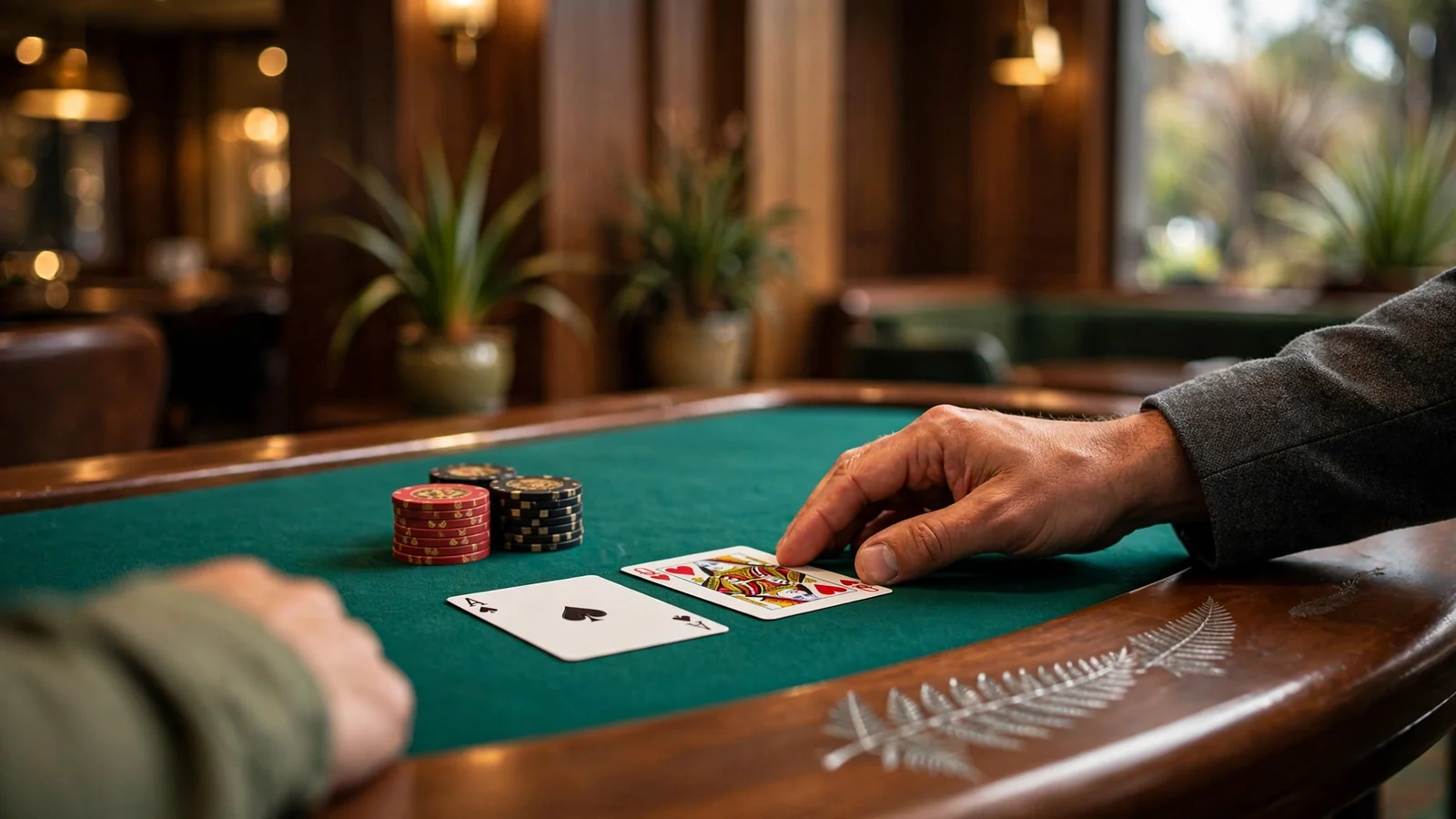
The Deal at the Table: Your Hand Versus the Dealer
Blackjack is a contest between your hand and the dealer’s. The aim is to finish nearer to 21 than the dealer without going over it. You are not trying to match the other people at the table, and a hand does not have to reach 21 to win. A modest total can be enough if the dealer finishes lower or goes bust.
The card values are straightforward. Number cards count as the number printed on them, while jacks, queens and kings are worth 10. An ace can count as either 1 or 11, whichever keeps your hand more useful without taking it over 21. That flexibility is why a hand containing an ace is often called “soft”: if the ace is counted as 11 and the total would bust, it can instead count as 1.
A natural blackjack is an ace together with a 10-value card as the opening hand. It is different from reaching 21 after taking another card. The payout attached to a natural is not identical at every table: a specialist review describes some tables as paying 3:2 and others as paying 6:5. I check the table’s posted rules rather than assuming one payout applies everywhere.
At the start of a hand, you place your wager and receive your cards; the dealer also has a hand, with a card visible to you. You use that information to decide what to do next. The choice is not “get as close to 21 as possible at any cost.” Taking another card can improve a low total, but it can also push you past 21, which means you lose that hand.
A hit means taking another card. If your total is low, that may be the obvious way to build it, but the ace’s value matters. Say your hand has an ace and a six: it can count as 7 or 17. If you hit and draw a card that would make the high total too large, the ace can drop to 1. That gives you room to act without treating the first total as fixed. Still, every hit changes the risk; the next card may help, or it may end your hand.

Standing means you take no more cards and let the dealer play. I used to stand simply because my total looked respectable, then watch the dealer finish ahead. The dealer’s visible card is part of the picture, but it does not tell you what the hidden card is. Standing is a decision to keep your current total and accept whatever the dealer’s hand becomes.
Some tables allow you to double down: you increase your wager and take one more card, then stop. It can be tempting when your first cards look promising, but it also means committing more to that hand before you know the result. Splitting is available when your opening cards have the same value under the table’s rules. You separate them into two hands, with a new card dealt to each, and then play each hand in turn. That creates more decisions, and it can mean more money in play.
Rules differ between games, so I read them before sitting down rather than after a hand has gone badly. The number of decks, the dealer’s approach to a soft 17, whether surrender is offered, and the payout for blackjack can all vary. Surrender, where offered, lets you give up a hand under the table’s conditions rather than continue it. The exact options and timing belong to that game’s rules; don’t assume every table handles them the same way.
You may also see insurance offered when the dealer’s visible card is an ace. It is a separate wager, not a way to improve your hand. I avoid treating it as a routine choice; for most players, it is not a bet to rely on. The main hand remains the main event.
If you are playing for money, I’d rather see you decide your budget before the first hand than try to recover a loss by raising the next wager. I have made that mistake. It turns a game of decisions into a chase. If a promotion is involved, read its fine print and bonus conditions on trustworthy sites and with the casino before playing. Blackjack may count differently toward wagering requirements, and maximum-bet rules can apply while those requirements are active.
Do
- Check the table's posted payout rules
- Decide your budget before the first hand
- Read bonus fine print on trustworthy sites
Don't
- Assume one payout applies everywhere
- Try to recover losses by raising wagers
- Ignore wagering requirements on bonuses
There is no need to act like a professional to follow the game. Watch the total, remember the ace can shift between 1 and 11, and make each choice with the table rules in mind. The dealer is your opponent, not your teammate. One hand at a time.
Free Online Blackjack: RNG Games and Live Dealers
When I look for a way to play blackjack online without downloading anything, I’m usually choosing between two quite different experiences: a software-run game and a live table streamed from a studio. Both put the game on your screen, but the pace and feel are not the same. If you want to play a hand or two in a browser, the difference matters more than a polished lobby does.
An RNG game uses software to shuffle and deal the cards. There is no camera feed to wait for and no dealer handling cards in front of you, so play can move quickly. You make a choice, the game responds, and the next part of the hand appears without the pauses that come with a live broadcast. That can suit you if you want a brisk game and are happy with a digital presentation.
It also means the table can feel rather solitary. The cards are animated or displayed by the game, and the pace is set by the software rather than a person. I find that convenient when I want to focus on the screen, but it can make the experience feel less like sitting at a casino table. Fast is not automatically better, either. When the next hand arrives at once, it is easy to keep clicking without paying attention to how long you have been playing.

A browser-based game may be available without a download, but that depends on the particular site and game. The word “free” can also describe different things: a game that lets you play without staking money, or a table where play involves a real-money balance. Those are not interchangeable experiences. Check what kind of table you have opened before you start, rather than assuming that a blackjack game online is free just because the page itself costs nothing to load.
Live-dealer games have a different rhythm. A real dealer handles actual cards, and a camera sends the table to your device. That brings the visible dealing and table setting closer to what you would see in a casino, even though you are watching through a stream. You wait for the dealer and the other activity at the table, rather than having each move resolved instantly by software.
That waiting can be part of the appeal. The dealing feels more tangible, and there is a person on screen rather than only an interface. But a live stream adds a layer between you and the table. The video may lag or pause, and a delay can make the game feel less immediate than an RNG version. If your connection is unstable, the smoothest-looking table can still be a frustrating one to follow.
RNG Games
Software-run games that use RNG for shuffling. They offer a brisk pace without the pauses of a live broadcast.
Live Dealer Games
Real dealers streamed from a studio. They provide a tangible experience closer to a physical casino.
Live tables may also require higher bets than software games. That is worth noticing before you join, especially if you are comparing options from the comfort of a menu and have not yet seen the table conditions. A live format is not necessarily the right choice just because it looks more authentic. The practical question is whether its pace and requirements suit what you are looking for.
Free access can vary across these formats. You may find an RNG game with a free-play option, while a live table may be presented for real-money play or may have different entry conditions. Do not assume every game offers a no-cost mode, or that a free version behaves exactly like a table where money is involved. The interface may look similar while the experience and stakes are different.
I used to treat the word “realistic” as if it meant “better.” It mostly means that the game is presented differently. With RNG blackjack, the software handles the dealing and the game moves faster. With a live dealer, actual cards are dealt on camera, but the stream can slow things down and the table may ask for higher bets. Neither format changes the basic reason people sit down to play; it changes what the time at the screen feels like.
If you are comparing free online blackjack games, think about what you want from the session. A quick browser game may be enough when you want a direct, uninterrupted pace. A live stream may suit you if seeing a dealer handle cards is part of the attraction and you are comfortable waiting for the broadcast. Some people will prefer one and some the other. I would not pick by graphics alone.

And if you move from a no-cost game to real-money play, pause before treating the screen as just another version of the same thing. Set a budget, do not chase losses, and read the table and promotion terms carefully. Blackjack may contribute differently to wagering requirements, and maximum-bet rules can apply while wagering. Fine print matters. A faster game can make it easier to lose track of time; a live one can make waiting feel like part of the show. Know which experience you have chosen.
Playing for Fun Without Putting Money at Risk
A free game can be a low-pressure way to get used to blackjack’s rhythm. You can watch a hand unfold, make a choice, and see what happens without a real-money stake riding on it. That changes the feel of the table: there’s room to pause, explore the controls and get comfortable with the flow rather than worrying about the cost of every decision.
I’ve found that useful, but it helps to be honest about what practice can and can’t do. A run of good results in a free game doesn’t tell you that you’ve found a reliable way to win. The cards can fall differently next time, and a game’s rules can affect both the decisions available and the house edge. Free play is a way to become more familiar with the experience, not a promise about what happens when money is involved.
What free play is good for
Think of it as a place to get your bearings. You can learn where the game displays your hand and the dealer’s, find the buttons without rushing, and see how the interface responds when you make a choice. If you feel unsure, you can stop and take a moment instead of trying to keep up with a live table.
That matters because nerves can make even a simple screen feel busy. I’ve clicked through a game too quickly, then realised I was reacting to the pace rather than thinking about the hand. With no stake at risk, you can slow things down and notice what you’re doing. It’s a small benefit, but a real one.
A free game can also help you decide whether blackjack is enjoyable for you at all. Some people like the pauses and decisions; others would rather play something else. No need to turn a trial into a project.
Finding a game that suits you
Some versions run in a browser, so you may be able to play without downloading anything. Others may ask you to install an app or create an account, so check what the page requires before you start. “Instant” can mean little more than a game loading in your browser; it doesn’t tell you whether registration, tracking permissions or other conditions are involved.
Sound is another simple preference. A free blackjack game with sound may make the table feel more lively, while silence can make it easier to concentrate or play somewhere quiet. Check the game’s controls first: you may be able to adjust or mute audio without changing anything else. There’s no special advantage in playing with sound. It’s atmosphere, not information.
Casual free play is also different from comparing online table formats. You don’t need to treat it as a test of whether you prefer software play or a streamed dealer. The point here is simply to spend time with the game without putting money down. If a free option turns into a sales pitch or keeps pushing you toward a deposit, you can leave it there.
Keep the boundary clear
The easy part of free play is stopping. The tricky part is deciding whether to move from practice to real-money play. There’s no requirement to make that jump, and a winning stretch in a no-stakes game doesn’t make the next session predictable. Free play can build familiarity; it can’t remove chance or guarantee a result.
If you do decide to play for money later, set a budget before you begin and don’t chase losses. Read the table rules and the operator’s terms rather than assuming every version works the same way. Blackjack variants differ, and those differences can affect strategy and the house edge. If a bonus is involved, check its fine print on a trustworthy site before accepting it: blackjack may contribute differently to wagering requirements, and maximum-bet rules may apply while you wager.
That’s a separate decision from trying a free hand. I’d keep the two clearly apart: use no-stakes play to see whether you understand the game and enjoy the pace, then make a fresh choice about money. If it stops feeling like fun, close the table. No grand system needed.
Online Blackjack in New Zealand: The 2026 Licensing Picture
When choosing where to play blackjack in New Zealand in 2026, you can use this list as a starting point for checking the details that matter to you. Review each operator’s available information before deciding where to play.
-
BitStarz
- License
- Curaçao Gaming Authority, licence no. OGL/2024/165/0185
You can note that BitStarz lists a Curaçao Gaming Authority licence, number OGL/2024/165/0185.
-
Neospin
- License
- Tobique Gaming Commission, licence no. 0000064
Neospin lists a Tobique Gaming Commission licence, number 0000064.
-
Lamabet
- Payout speed
- 1-3 business days
Lamabet’s stated payout speed is 1–3 business days.
-
Ricky Casino
- License
- Tobique Gaming Commission, licence no. 0000002
Ricky Casino lists a Tobique Gaming Commission licence, number 0000002.
-
7Bit Casino
- License
- Tobique Gaming Commission, licence no. 0000091
7Bit Casino lists a Tobique Gaming Commission licence, number 0000091.
-
Play Grand
- License
- Malta Gaming Authority, licence no. MGA/B2C/370/2017
Play Grand lists a Malta Gaming Authority licence, number MGA/B2C/370/2017.
-
N1 Casino
- License
- Malta Gaming Authority, licence no. MGA/B2C/394/2017
N1 Casino lists a Malta Gaming Authority licence, number MGA/B2C/394/2017.
-
Wintino
- Payout speed
- 1-3 business days
Wintino’s stated payout speed is 1–3 business days.
-
Zotabet
- License
- 07017519840
- Payout speed
- 1-3 business days
Zotabet has the listed identifier 07017519840 and a stated payout speed of 1–3 business days.
If you are trying to work out where to play online blackjack in New Zealand, the legal setting matters more than a polished homepage or a “trusted” badge. Those are claims made by a site. They do not tell you whether it falls within New Zealand’s licensing system.
The Online Casino Gambling Act 2026 came into force on 1 May 2026, establishing New Zealand’s first domestic licensing regime for online casino gaming. The Department of Internal Affairs is the country’s primary gambling regulator and oversees the framework for licensing online casinos. The Gambling Commission has a separate role within it: it hears and decides casino licence applications, issues online casino licences, and approves changes to licence conditions.
That division is worth keeping straight. The Department oversees the regulatory framework; the Commission makes licensing decisions and handles changes to the conditions attached to a licence. A provider’s application is not the same thing as a licence, and a licence is not a blank cheque to change its terms without approval.
New Zealand Licensing Authorities
The Department of Internal Affairs oversees the regulatory framework, while the Gambling Commission hears licence applications, issues licences, and approves changes to conditions.
What the transition means
The new system is not fully operational yet. The Act sets a transition from 1 May 2026 to 1 December 2026. Online casinos that were already serving people in New Zealand before the Act came into force may continue during that period under the transitional provisions. That does not mean every offshore site has a New Zealand licence.
Before the Act, online casino gambling supplied from outside the country was not licensed or supervised by a New Zealand regulator. A customer who had a dispute with an offshore website in that era had no domestic government recourse. The new framework changes the regulatory picture, but the full licensed regime is not expected to be fully operational until 2027.
The Gambling Act 2003 does not permit online casinos to be based in New Zealand, and domestic online casinos are prohibited. The 2026 Act instead creates a route for licensing online casino providers under a New Zealand framework. During the transition, providers already operating here may continue subject to the Act’s provisions; providers that did not qualify for that transition should not be treated as part of it simply because their website is accessible.
What the rules can and cannot tell you
People ask for the best website for online blackjack, where to find live tables, whether a site supports playing with friends, or whether a casino bonus is worth taking. Licensing is relevant to those choices, but it does not answer every practical question about a game or promotion. It also does not turn “professional” blackjack tips into a reliable route to profit.
I have learned not to confuse a confident sales pitch with oversight. During the transition, advertising online casino gambling to people in New Zealand is prohibited. So if a promotion is pushing hard, pause and look beyond the wording: a bonus is subject to its conditions, and a claim about a licence should be understood in the context of the new system and its transition.
The Commission’s authority over applications and licence conditions is central to the framework, while the Department oversees regulation more broadly. Those are distinct responsibilities, not interchangeable labels. For anyone considering online play, the useful question is not simply whether a site looks established, but what legal position it actually occupies in New Zealand during this changing period. No shortcut there.
A Sensible Blackjack Strategy Starts With the Rules
I used to think a strategy was a set of moves I could learn once and carry from table to table. That sounds tidy. It also overlooks the small print that changes what those moves are worth.
Blackjack variants can have different rules, and those differences affect both the decisions available and the house edge. The number of decks, how the dealer handles a soft seventeen, whether surrender is allowed and what a natural blackjack pays can all vary. A strategy that assumes one set of rules may not fit another. Before relying on a chart or a tip, I now look at the table rules it was built for. Otherwise, it is easy to follow the advice correctly and still apply it to the wrong game.
That is the practical starting point if you want to learn to play blackjack with a strategy in mind: understand the particular version first. Check which actions the table permits, how the dealer plays, and how winning hands are paid. Then judge advice against those conditions rather than treating “best way to play” as a universal recipe. There isn’t one rule sheet behind every table.
I also separate a decision strategy from a promise about results. A sound approach can help you make choices consistently, but it cannot make every hand go your way or remove the house edge. I once mistook confidence for control. Not the same thing.
Card counting is another subject that gets dressed up as a shortcut. In New Zealand, using mental calculation to count cards is not illegal. That fact is about legality, not a guarantee of profit or a recommendation that it will work in every setting. Keep the distinction clear: a permitted mental technique is not a reliable way to force a favourable outcome. Avoid claims that a system can guarantee a win.
Insurance is a bet I’d avoid in most cases. It can sound like sensible protection, but the label does not make it automatically useful. If you are unsure what a side offer changes, declining it is simpler than making a rushed decision.
If real money is involved, set a budget before you start and don’t chase losses by increasing it. Read the table terms and, where relevant, check the fine print and bonus conditions on trustworthy sites before playing. Blackjack may count differently toward wagering requirements, and maximum-bet rules can apply while wagering. Those details can matter just as much as the strategy you brought to the table.
A sensible strategy is less about memorising a magic sequence and more about knowing what game you’re facing, what its rules permit, and where your own limits are. The rules first. Always.
Can You Play Blackjack With Other People Online?
Yes, if the game offers a shared table with more than one player seat. But “playing with other people” can mean something different from competing against them. At a blackjack table, the players generally take turns while the dealer remains the opponent; your result is not decided by whether another player gets a better hand.
That distinction matters when you’re looking for a two-player game. A table may let you and a friend sit in separate seats and follow the same dealer’s round. Other versions may be designed for one player at a time, even if the screen includes chat or other social features. So check what the table actually supports rather than assuming that an online game is multiplayer because it has a live-looking interface.
I’ve found it helps to agree with a friend beforehand on what you want from the session: sharing a table, chatting while you play, or actually competing. Those are not necessarily the same feature. If the game does not provide shared seats, taking turns on one account is not the same as playing together, and it may not be allowed by the operator’s terms.
What about card-counting software?
This is where claims about blackjack card-counting software need a hard look. Online RNG blackjack uses software shuffles, and its faster pace can make the game feel quite different from watching cards dealt at a physical table. A tool that claims to track cards does not make counting effective when the software shuffles automatically.
I would be wary of anything presented as a shortcut that “reads” the game or promises an edge. Counting is about keeping track of cards that have already appeared; automatic software shuffles prevent that history from serving as a dependable guide to what comes next. A program can record what happened on screen, but recording is not the same as predicting the next deal.
There’s also a practical difference between a tool that explains rules or helps you review decisions and one that claims to calculate a guaranteed winning approach. The first can be a learning aid. The second is selling certainty where the game does not provide it. Keep those categories separate.
If your aim is a social session, look for a table that explicitly supports multiple player seats and decide whether you want chat or simply to play alongside someone. If your aim is to use software to beat automatic shuffles, don’t count on it. Different goals, different expectations.
What a Blackjack Game Actually Asks You to Do
Blackjack has a simple destination: finish with a hand closer to 21 than the dealer’s, without going over 21 yourself. You are not trying to collect the most cards or beat the other people at the table. The dealer is your opponent.
That distinction took me a while to really absorb. I used to look at a hand and think only about its total, as if reaching 21 were the entire point. It isn’t. A total below 21 can still be enough if the dealer finishes lower; a stronger-looking hand can fail if it goes over. The number matters in relation to the dealer’s result.
Think of 21 as a ceiling, not a target you must hit. If your hand stays below it, the comparison with the dealer decides whether you have done better. If you pass it, you have gone bust, and the hand is lost regardless of what the dealer later holds. That makes blackjack a contest between two hands, not a race to make your own total as high as possible.
The dealer’s hand matters even when yours feels settled. A total that seems comfortable on its own may not be enough against a stronger dealer hand. And a modest total may turn out to be sufficient if the dealer does not reach it. You have to judge your position against an opponent whose final result is still part of the equation.
That’s the whole idea behind a blackjack game: get nearer to 21 than the dealer while staying within the limit. It sounds almost too plain. But when the cards are in front of you, it is easy to get distracted by the next decision, the size of a bet, or the hope of a perfect total. I find it helps to come back to the comparison. Not “Can I make 21?” but “Can I finish ahead of the dealer without going over?”
A small shift in focus. It makes the game easier to read.
The Choices You Make During a Blackjack Hand
Once it is your turn, the decision is less complicated than the table can make it look. You can take another card, stop, increase your stake in a particular way, or split a pair. Some tables also let you surrender. The rules determine which choices are available and when.
Hit means asking for another card. You can keep hitting while you want to improve your hand, but every extra card brings the possibility of going over twenty-one. I used to treat “one more” as a harmless try. It isn’t; you are choosing to accept that risk.
Stand means you are done taking cards for that hand. It can feel passive, especially when the dealer’s visible card looks strong, but standing is still a decision: you are keeping the total you have and letting the dealer play.
With double down, you increase your original stake and take just one more card, then stop. The catch is right there: you do not get to keep drawing if that card leaves you uncomfortable. Table rules decide when doubling is permitted, so check them before you act rather than assuming every game handles it the same way.
Split is available when your first two cards have the same value under the table’s rules. You separate them into two hands, with a new decision to make for each. Splitting is not simply getting another chance; it also means playing more than one hand. I have found it easy to notice the extra opportunity and overlook the extra exposure.
Surrender, if offered, lets you give up the hand under the conditions set by that table. It is not available everywhere, and its timing and effect depend on the rules. Read the table information first.
Insurance is a separate wager, not a way to improve your hand. I would avoid it as a routine choice. Before playing for money, set a budget, do not chase losses, and check the fine print and bonus conditions on trustworthy sites and casinos. Blackjack may count differently toward wagering requirements, and maximum-bet rules can apply while wagering. Don’t let a bonus steer your decisions.
Starting Blackjack as a Beginner: What You Need to Know
When I first tried blackjack, I treated the cards as a puzzle and kept losing track of what my hand total meant. The useful starting point is simpler: you are playing against the dealer, and your aim is to finish nearer to 21 than the dealer without going over. You do not need to beat the other people at the table.
Calculating Hand Totals
-
1
Identify Number Cards
Count number cards as the value printed on them.
-
2
Value Face Cards
Assign a value of 10 to jacks, queens, and kings.
-
3
Determine Ace Value
Count the ace as either 1 or 11, whichever keeps your hand useful without exceeding 21.
The card values are the part to get comfortable with first. Number cards count as the number printed on them. Jacks, queens and kings are worth 10 each. An ace can count as either 1 or 11, depending on which value helps your hand without taking it over 21. That flexibility makes aces easier to handle than they look at first.
For instance, an ace with a 6 can be counted as 7 or 17. If adding another card would make 17 too high, the ace can count as 1 instead. You do not have to memorise a complicated system to follow that idea. Just keep a running total and notice when an ace can change value.
A first game is easier to follow if you keep two things in mind: your own total and the dealer’s hand. The dealer is your opponent; the table is not a contest against the other players. I used to watch everyone else’s cards and forget to check what my own total could become. Easy mistake.
You also need to recognise what counts as going over 21. If your total passes that point, you have gone over, even if the dealer later does the same. The goal is not simply to collect as many high-value cards as possible. A hand that looks strong can become too high, so the total matters more than how impressive the cards seem.
That is enough to understand the basic shape of a beginner’s game: identify each card’s value, keep track of the total, and compare your result with the dealer’s. You can learn the table’s particular options as you go, but the numbers are the foundation. Keep it simple.
Betting, Two Hands, and Trying a Blackjack Simulator
A blackjack simulator can be useful for rehearsing the link between your wager and your decisions, rather than simply clicking through hands. You can pause before acting, consider whether to hit or stand, and see how a different choice changes the hand. If the simulator lets you adjust your bet, try changing it only to understand how the amount at stake affects your comfort—not because a particular pattern can make the game predictable.
I used to treat a larger wager as a way to make a dull stretch more exciting. It mostly made every decision feel heavier. Practising with simulated bets gives you room to notice that reaction without turning it into a reason to increase what you risk later. If you do play for money, decide on a budget beforehand and do not chase losses.
Two hands at once are a separate challenge. If a table permits you to bet on two hands, you are making decisions for each one while the dealer’s hand remains the shared point of comparison. A simulator can help you see whether managing both hands makes you rush, forget a decision, or lose track of how much you have committed. It does not make either hand more favourable; it simply gives you more to follow.
The available choices still depend on the table. You may be able to hit, stand, double down or split, but the rules around those actions can differ. The number of decks, the dealer’s decision on soft seventeen, surrender availability and the payout for a natural blackjack may also vary. A simulator that uses different rules from the table you later play can teach you the interface but leave you practising the wrong assumptions. Read the displayed rules first.
I once focused on the buttons and barely noticed the conditions behind them. That is an easy mistake to repeat. Treat the simulator as a place to rehearse decisions and notice your habits, not as proof that a betting pattern will win. More hands, more wagers. Not more certainty.
Does blackjack always pay 3:2?
No. A natural blackjack often pays 3:2, but some tables pay 6:5, so check the posted rules before you play.
Is card counting illegal?
No. Using mental calculation to count cards is not illegal under New Zealand law.
Is insurance a good bet?
For most players, no; insurance is a separate wager offered when the dealer shows an ace, and it is not a bet to rely on.
Casino Games in New Zealand: Roulette, Blackjack & More
Content created by the «casinoslotnz.com» team