
Separate the table’s mechanics from its marketing
 Available in US
Learn how automated and live roulette handle bets, results, and payouts—and what autoplay or betting systems do not change.
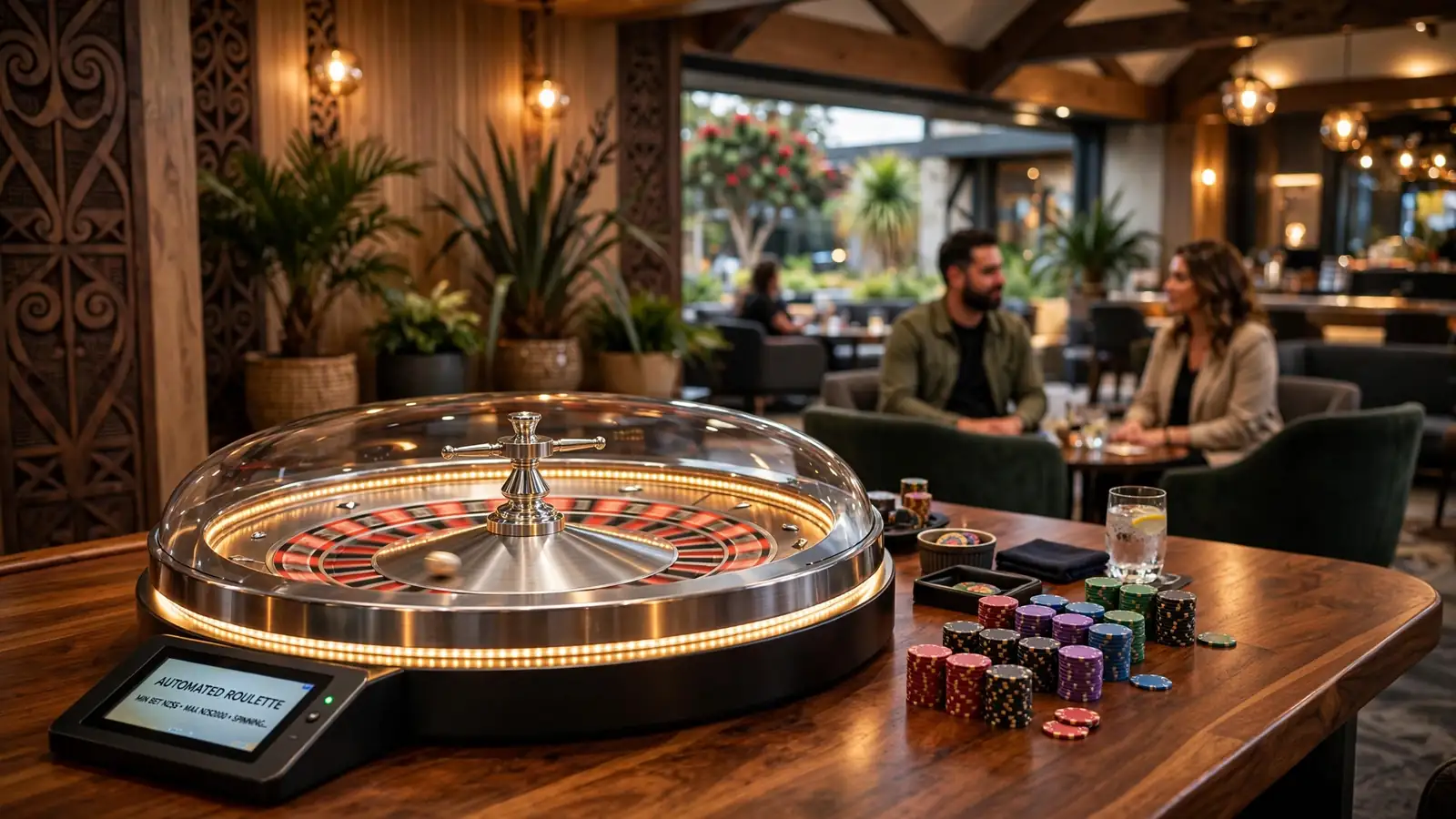
Auto Roulette VIP: What the Table Actually Does
The word “VIP” can make a roulette screen sound like it comes with a different game. I would not read it that way. The label may describe how a casino presents a table or account, but it does not change the basic sequence: you choose chips, place them on the table, and wait for the ball to settle in a numbered pocket. That pocket decides the winning number.
Your choices can cover one number, a colour such as red or black, odd or even, or a combination of numbers. The table records the bets and, once the result is settled, winning bets are paid according to the kind of bet you placed. “Automatic” describes the handling of that result and payment; it does not mean the table is choosing bets for you or giving a VIP player a special route to a win.
That distinction matters if you are comparing an auto roulette casino with a conventional roulette screen. The interface may arrange betting areas differently or make it easier to repeat an action, but the essential question is still what you placed a chip on and whether the ball landed in a pocket that matches it. I have learned to distrust any grand label that makes a familiar process sound like a secret upgrade. The mechanics are plain.
If you’re looking at automated roulette options in New Zealand for 2026, this list gives you a concise reference point. Check the details provided for each operator as you decide what to explore.
-
BitStarz
- License
- Curaçao Gaming Authority, licence no. OGL/2024/165/0185
BitStarz is listed with a Curaçao Gaming Authority licence, number OGL/2024/165/0185.
-
Neospin
- License
- Tobique Gaming Commission, licence no. 0000064
Neospin is listed with a Tobique Gaming Commission licence, number 0000064.
-
Lamabet
- Payout speed
- 1-3 business days
Lamabet’s stated payout speed is 1–3 business days.
-
Ricky Casino
- License
- Tobique Gaming Commission, licence no. 0000002
Ricky Casino is listed with a Tobique Gaming Commission licence, number 0000002.
-
7Bit Casino
- License
- Tobique Gaming Commission, licence no. 0000091
7Bit Casino is listed with a Tobique Gaming Commission licence, number 0000091.
-
Play Grand
- License
- Malta Gaming Authority, licence no. MGA/B2C/370/2017
Play Grand is listed with a Malta Gaming Authority licence, number MGA/B2C/370/2017.
-
N1 Casino
- License
- Malta Gaming Authority, licence no. MGA/B2C/394/2017
N1 Casino is listed with a Malta Gaming Authority licence, number MGA/B2C/394/2017.
-
Wintino
- Payout speed
- 1-3 business days
Wintino’s stated payout speed is 1–3 business days.
-
Zotabet
- License
- 07017519840
- Payout speed
- 1-3 business days
Zotabet is listed with the identifier 07017519840, and its stated payout speed is 1–3 business days.
An auto-spin button, where a product offers one, is a control for repeating play rather than a clue about the result. It does not change what counts as a winning bet. Nor does a VIP badge establish a particular payout, special roulette rule, or extra protection. Those are separate claims and should not be inferred from the table’s name. Keep the sales language in its lane.
The phrase “automated roulette machine” can also be confusing. A player may picture a physical machine, a digital table, or a screen that handles actions automatically. For a New Zealand player, the label alone does not tell you who operates the service or what legal status applies to it. Treat the game description and the operator’s position as separate matters.
The Online Casino Gambling Act 2026 took effect on 1 May 2026 and created the country’s first domestic licensing framework for online casino gambling. It does not mean every website available to a New Zealand resident is locally licensed. The Gambling Act 2003 had barred online casinos from being based in New Zealand, while offshore online casino gambling had not been licensed or supervised by a New Zealand regulator before the new Act. Customers using offshore sites in that earlier period had no domestic government recourse.

The transition is not an instant switch to a fully operating licensing system. Online casinos that were already serving people in New Zealand before 1 May 2026 may continue during the transitional period, which runs until 1 December 2026. Providers that have not applied for a licence must stop operating in New Zealand by that date. The complete licensed regime is expected to be operating in 2027, and unlicensed operation is expected to become an offence around the middle of that year.
Those dates matter more than a polished table name. The Department of Internal Affairs is New Zealand’s primary gambling regulator and oversees the online casino licensing framework. The Gambling Commission handles casino licensing applications, decides them, issues online casino licences, and approves changes to licence conditions. That division of responsibilities is useful to know when trying to understand what “licensed” means in this changing market. A site displaying roulette is not, by that fact alone, evidence of a New Zealand licence.
So when you see “auto roulette VIP,” separate three things in your head: the betting interface, the result and payment mechanics, and the operator’s legal position. The table part is straightforward: chips go on selected bets, the pocket determines the number, and winning bets are settled according to bet type. The VIP wording does not establish extra game rules. The legal context depends on the operator and the transition provisions, not on how automated or exclusive the screen looks.
I used to let a confident label do too much of the thinking for me. It is better to check what a term actually tells you, then stop there. No magic in the name.
Can a Roulette Strategy Beat the Machine?
I used to treat a run of results like a message. A few reds in a row, and I’d start thinking black was “due”. A number showing up twice would get its own little story. It felt like analysis; mostly, it was me finding patterns in outcomes that had already happened.
With software-based roulette, the result is generated through a random number generator, or RNG. That matters because a betting plan can organise your decisions, but it cannot read the next result from the previous ones. A screen full of recent outcomes may be useful for keeping track of what you have seen. It does not turn those results into a forecast.
That distinction is easy to lose when a strategy has a name, a neat sequence or a confident explanation attached to it. “Smart system” often means a rule for choosing what to bet after a win or loss. “Machine strategy” can sound as though you are working out how the software behaves. In practice, neither label gives you a reliable way to know where the next result will land.
What a strategy can actually do
A strategy can set boundaries for your own decisions. You might decide in advance which kinds of bets you want to make, when you will stop, and how you will respond if the session is not going your way. Those are choices about your play, not tools for steering the RNG.

That can still be useful. When I stopped changing my plan every time a result annoyed me, I found it easier to notice what I was actually doing: chasing a loss, raising a stake impulsively, or staying longer than I meant to. A written rule does not make a bet more likely to win. It can make it harder to pretend an impulsive decision was part of a clever system.
Keep the goal modest. A strategy may help you play more deliberately, but it cannot promise a profit or remove the uncertainty. If the plan only seems to work when you ignore the losing stretches, it is not a dependable edge. It is a story with the awkward bits edited out.
Why patterns can mislead
People are good at spotting shapes. That is useful in plenty of situations, but it can also make random results look as though they are following a script. After a streak, you might expect a reversal. After a number has been absent, you might feel it is about to appear. Neither feeling tells you what the RNG will produce next.
This is where “due” becomes a trap. A past result can feel unfinished, as though the table owes you a correction. It does not. The software’s random result is not a reply to your last bet, and a run of outcomes on screen is not a promise about what comes next.
An auto roulette strategy is most honest when it describes a rule for your behaviour, not a formula for predicting the machine. For instance, you can choose to stick to a set of bet types rather than switching whenever the history display catches your eye. That may reduce second-guessing. It does not improve the odds of a particular result.
Do
- Use a strategy to set boundaries for your decisions
- Use a plan to avoid impulsive staking
- Use a rule to keep your play deliberate
Don't
- Treat a run of results as a forecast
- Assume a "smart system" can read the RNG
- Believe a pattern proves a number is "due"
Keep the claim smaller than the sales pitch
Be wary of systems presented as ways to “beat” automated roulette software. A progression can tell you to change your stake after a loss; it cannot make the RNG produce a favourable outcome. A sequence can tell you what to do next; it cannot prove that the next result will match the sequence.
I have made the mistake of confusing a plan with an advantage. The plan felt reassuring because it gave each decision a reason. But a reason is not a prediction, and confidence is not evidence. If you want to use a strategy, judge it by whether it helps you keep to your own limits—not by whether it claims to outsmart random results.
So, can a roulette strategy beat the machine? There is no reliable strategy for knowing the next software-generated result. You can manage your choices. You cannot make randomness take instructions.
That’s the line.
What “Auto Roulette” Means at the Table
“Auto Roulette” can sound as though the game has a special result rule hidden behind the label. I used to read names like that as clues that the table must work differently. The useful distinction is simpler: the wording describes a version of roulette presented as automated, while the result still comes down to the ball and the numbered pockets.
That is the part to keep in view. A roulette wheel has numbered pockets, and the winning number is the one belonging to the pocket where the ball comes to rest. The label does not replace that outcome rule or create a different way to decide which number wins. The pocket settles it.

Nothing mysterious there.
The word “automated” can also invite assumptions. You might picture a table that chooses your action, changes the result, or somehow makes roulette behave like a different game. The name alone does not establish any of those things. It is not a promise about what decisions are made for you, nor does it tell you that the wheel uses a special outcome rule. It is a label, not a full explanation of how a particular table is set up.
I find it helps to separate the name from the event. First, there is the table’s presentation: the way the game is labelled and shown. Then there is the result: a ball landing in a numbered pocket. If you blur those together, a product name can start to sound like a feature it has not actually described.
The same goes for the phrase “automated roulette.” It may be used as a broad way to refer to roulette offered in an automated format, but the important question for understanding a result is not the adjective. It is which numbered pocket the ball reaches. That pocket identifies the winning number. There is no need to invent a second meaning for the result just because the title uses “auto.”
When I first started paying attention to roulette labels, I gave them more weight than they deserved. “Auto” sounded like it might explain the game’s logic. It doesn’t, by itself. The name tells you how the product is being described; it does not tell you that a different pocket-counting rule applies. Simple, but easy to overread.

So if you see a table called Auto Roulette, think of it as roulette in an automated presentation, not as a separate method for deciding the winner. The ball’s final pocket remains the reference point. That is the clean way to understand the term without reading extra promises into it.
A name can be vague. The result is not: the numbered pocket where the ball falls determines the winning number.
Live Auto Roulette: The Dealer Changes the Setup
“Live” changes where the roulette result comes from. A live-dealer product does not use a random number generator (RNG) to produce the result. That is the key distinction from software-based roulette, where an RNG is used. The table may look familiar on screen, but the two formats do not determine outcomes in the same way.
I used to treat the word “live” as decoration: the same game, just with a dealer in the picture. That misses the important part. In live roulette, the dealer is part of the format; the result is not being generated by roulette software. With software-based play, the result comes from an RNG instead. Simple distinction. Easy to overlook.
The phrase “live auto roulette” can also sound like a contradiction. “Auto” suggests a system running on its own, while “live” points to a dealer-led game. In practice, those words can describe different parts of the experience: the live label identifies the dealer format, while “auto” may be used to describe how a player interacts with the game. The label alone does not turn a live product into an RNG game, nor does it tell you every detail of how the table is run.

That matters when you are comparing formats. If you see a live casino roulette table presented as automated, do not assume its outcome is produced by the same process as a software simulation. The reliable distinction is narrower: live-dealer products do not use an RNG system; software-based roulette options do. The word “automated” by itself does not settle which format you are looking at.
I learned to stop reading product labels as explanations. “Instant” or “auto” can sound like a technical promise, but neither word tells you what determines the winning result. Look for whether the product is described as live dealer or software-based. That is a more useful first check than the headline.
There is no need to turn this distinction into a claim that one format is more predictable or more favourable. A live dealer does not make the result something you can call in advance, and the absence of an RNG does not create a reliable betting method. It only tells you that the live product is not using that software system to generate its result. Different setup, not a shortcut.
If you prefer the live format, think of it as a different way the game is presented and determined, rather than as a special version that changes what a roulette result means. If you prefer software-based play, remember that its outcomes are generated through an RNG. Either way, a confident-looking interface cannot tell you what the next result will be.
That is the distinction I would keep in mind when a casino calls something “live auto roulette”: the live dealer format does not use an RNG, while software-based roulette does. The label may bundle those ideas together, but they are not interchangeable. Read past the wording. The setup matters.

Roulette Software, Electronic Tables and Randomness
When a roulette game runs as software, its outcomes are generated by a random number generator, or RNG. That is the useful distinction to keep in mind when you see terms such as “automated” or “electronic”: they describe how a game is presented or operated, but they do not, by themselves, tell you where its results come from.
I used to treat a polished screen as if it explained the whole setup. It doesn’t. A game can make betting feel automatic without that telling you anything about how the winning result is produced. For software-based roulette, the relevant point is that an RNG supplies the outcome. The interface and the result mechanism are separate things.
An electronic roulette terminal can mean different arrangements. It might refer to a screen-based game, or to equipment that automates some parts of a table experience. The word “semi-automated” is no more precise: it suggests that some actions are handled by technology, but it does not identify the source of the result. If the roulette game is software-based, it uses an RNG. If all you know is that a terminal is electronic, you cannot infer the outcome mechanism from that label alone.
That distinction matters when a product description leans on phrases like “automated roulette betting software”. Betting automation and outcome generation are not interchangeable. Software may manage parts of the experience, but that does not mean it can choose a favourable result or reveal the next one. The RNG is the point to understand for software roulette; the word “automated” is not a shortcut to understanding it.

I’m also wary of anything presented as online roulette prediction software. A tool that claims to predict software-generated outcomes is making a different claim from a game simply using an RNG. The existence of software in both cases proves nothing about prediction. A confident-looking display, a stream of past results or a technical-sounding label does not change what the RNG does: it generates the game’s outcome.
Keep the wording literal. “Software-based roulette” tells you the game’s results come from an RNG. “Electronic terminal” tells you the experience involves electronic equipment, but not necessarily enough to identify how its result is produced. “Automated” may refer to parts of the interface or process; it is not evidence of a special outcome system. Those labels can sit close together in a description, but they answer different questions.
I’ve learned not to fill in the gaps with whatever sounds most advanced. If the product description does not make clear whether the roulette is software-based, its electronic presentation alone is not a reason to assume a particular result mechanism. And if it is software-based, the important detail is the RNG—not a prediction feature implied by the word “smart”. Less mystery, fewer assumptions.
How to Play Without Mistaking Autoplay for a Trick
The useful way to approach an automated roulette table is to ignore the grand-sounding labels and follow the actual sequence. You choose chips, put them on the table and wait for the result. The interface may handle the payout, but it does not make a bet safer or turn a guess into a method.
Basic Play Sequence
-
1
Select Chip
Choose the specific chip value you want to use for your wager.
-
2
Place Bet
Position the chip on a specific number, a colour, odd/even, or a combination of numbers.
-
3
Verify Selection
Pause to check that the chip is in the intended area before the round proceeds.
-
4
Await Result
Wait for the ball to land in a pocket, which determines the winning number and settles the payout.
Start by selecting the chip you want to use. Then choose where to place it. You can back a specific number, choose red or black, choose odd or even, or cover a combination of numbers. Those are different kinds of bets, not different ways of controlling the result. I used to focus on the table layout as if finding the right spot could reveal something. It can’t.
Before committing, take a moment to check what you have placed. A bet on a single number is not the same kind of choice as a bet on a colour or a group of numbers. The table records the position of each chip; the winning pocket decides which bets count as winners. If you meant to choose one area and placed a chip somewhere else, the game has no way to know what you intended.
That small pause matters more than any supposed autoplay trick. “Autoplay” can sound as if the game is making clever decisions for you. In practice, the basic play still comes down to the chips and bets you select. Automation is not a hidden reading of the wheel, and it does not change the rule that the ball’s landing pocket determines the winning number.
Once the ball falls into a numbered pocket, the table settles the result. A winning bet is paid automatically according to the type of bet placed. The payout is tied to what you chose, not to whether you used a manual or automated feature. That is why it helps to understand your selection before the result appears: the same winning number can leave one bet successful and another unsuccessful.
If you are learning how to play, keep the first attempt simple. Choose a chip, place a bet you understand, and watch how the table marks the result. You do not need to cover the layout with chips to learn the sequence. Nor does a run of results tell you what the next pocket will be. The practical lesson is about reading your own bet correctly, not finding a pattern in the screen.
I have made the basic mistake of letting a confident label do the thinking for me. “Trick” is usually just a promise attached to an ordinary choice: where to put a chip. A table can automate the handling of a winning payout, but it cannot make a losing selection win. Keep those ideas separate and the game is easier to follow.
So, when you see an automated option, treat it as a way the table handles play, not as a shortcut around the rules. Select the chip, place the bet you intend, and judge the outcome by the pocket where the ball lands. The rest is presentation. No secret switch.
Free Spins and Roulette Simulators: What They Can Show
A free roulette simulator can let you watch software-generated rounds without placing a cash wager. That makes it useful for getting familiar with the screen and seeing how a run of results might look. It is a demonstration, though—not a preview of what will happen when you later play for money.
The word “spins” can be a little misleading here. Roulette has rounds, and a simulator may let you start them one at a time or, if that option is provided, run them automatically. Automatic play changes how the rounds are started; it does not turn the display into a forecast. I used to read a sequence of results as if it were trying to tell me something. It wasn’t. Just a sequence.
Software-based roulette uses a random number generator to produce its outcomes. A simulator can therefore show different results across rounds, but what it shows does not establish what a later round will produce. A stretch of one colour, or a result that repeats, offers no reliable clue about the next outcome. The demo has no memory in the sense a player might hope for.
That distinction matters if you are looking for free play to test a hunch. You can use a simulator to understand how the interface responds or to observe how varied the results can be. You cannot use its past results as evidence that a particular number, colour or combination is due. I’ve made that mistake with real money. The screen looked persuasive; my reasoning wasn’t.
Nor should a free simulator be treated as the same experience as a live dealer table. The simulator is software-based, while a live dealer product has a different setup. A demo result only tells you what happened in that software round. It does not demonstrate how a live table will behave, and it does not carry over as a prediction.
If you open a roulette simulator with automatic rounds, keep the purpose modest: watch, learn the layout, and notice how the software presents outcomes. Don’t confuse speed or repetition with insight. A simulator can make the game easier to inspect, but it cannot make random results readable in advance.
Useful for familiarising yourself. Not a crystal ball.
Live Roulette, La Partage and the Limits of What’s Verified
“VIP” can sound like a promise of special treatment, but the label alone tells me very little about a live roulette table. It does not establish a particular rule, payout or player benefit. I’d separate the wording on a page from the actual rules attached to the game.
The useful distinction here is how the result is produced. A live-dealer roulette product does not use an RNG system. That sets it apart from software-based roulette, but it does not tell you which table rules apply. The live format describes the way the game is presented; it is not a shortcut for knowing every condition.
That matters when you see La Partage mentioned alongside live roulette. The name by itself is not enough to establish how a particular table handles a bet or what it pays. Nor does the fact that a dealer is involved confirm that La Partage applies. I would not assume it is available just because a page combines the terms “live,” “auto” and “VIP”.
Check the rules shown for the specific game before you play. Look for the rule by name and read the table’s own wording rather than relying on a promotional label or a general description of live roulette. If the rule is not clearly stated, do not fill in the gap from what another table might do. Different wording can matter, and guessing is still guessing.
I’ve learned not to treat a familiar name as a guarantee. A game can be live without that telling you anything definite about La Partage. A VIP label does not settle it either. The reliable point is narrower: live-dealer products do not use an RNG system. That tells you about the source of the result, not whether a particular rule is in force.
So, when comparing live tables, keep those questions separate. Is it a live-dealer product? The relevant distinction is that it does not use an RNG. Does its stated rule set include La Partage? Look for that in the specific game’s rules; the live format alone does not answer it. And does “VIP” promise a concrete advantage? Treat the label as wording, not evidence of a benefit.
No leap from the label.
Auto-Betting: The Bets Still Follow the Table
“Auto-bet” sounds as if the game is making decisions for you. I’d read that label more narrowly: automation can relate to how bets are repeated or handled, but it does not change what counts as a bet or how a winning one is paid.
At the table, you choose chips and put them on the options you want. Those can be specific numbers, red or black, odd or even, or combinations of numbers. The choice still belongs to you. A feature that repeats a selection is not a separate roulette system, and it does not turn a wager into a different kind of bet.
That distinction matters when you see claims suggesting automatic play changes the result or makes a choice safer. It does neither. The outcome is still decided by the pocket where the ball lands, and the bet’s type determines how a winning wager is paid. Automation is about handling a choice, not improving its chances.
I’ve been caught by labels that make a routine function sound like an advantage. “Hands-free” is the sales pitch; the practical point is that you remain responsible for what you select and how long you let it run. If a repeated bet no longer suits you, the interface may need your attention before the next round. Don’t assume the word “auto” means the game will rethink your stake or stop because you have had enough.
Keep the claim modest. Auto-betting may describe an automated way to place or repeat bets, but it does not establish a winning method, alter the table’s bet categories, or change the payout basis. The table still decides the result. You choose the bet. Nothing clever there.
Does Live Auto Roulette Really Run on a 30-Second Timer?
A “30-second timer” sounds like a neat rule: the table counts down, betting closes, and the next result follows on schedule. But I wouldn’t treat that interval as a standard feature of live roulette. A countdown shown on a particular table would describe that product’s displayed process, not establish a universal spin time.
The key thing is simpler. The winning number comes from the numbered pocket where the ball lands. A timer does not determine the result, and a displayed countdown cannot tell you which pocket the ball will reach. Those are separate parts of the experience.
I’ve learned not to read a precise number on a screen as a promise about how every table works. A live product may show betting phases or other on-screen cues, but the timing and presentation can depend on the specific table. Without checking that table’s own rules and interface, it’s safer not to assume that every live auto roulette game runs on the same 30-second cycle.
That distinction matters if you’re deciding whether the pace suits you. A countdown can create pressure to act quickly; it isn’t a reason to place a bet before you’re ready. The number that settles the round is still the pocket the ball lands in, not the clock.
So, does live auto roulette run on a 30-second timer? That wording alone doesn’t establish it. Check what the individual table actually displays, and keep timing claims separate from the game’s outcome rule. The ball decides the number.
Casino Games in New Zealand: Roulette, Blackjack & More
Content created by the «casinoslotnz.com» team